Gas is the practical starting choice for homeowners who want an easy, controlled flame, while wood is for those who value a more traditional fire and accept more cleanup. Which gas vs wood fire pit Phoenix choice fits your backyard, home and environment?
Gas offers quick control; wood brings crackle and aroma, along with tending, smoke and ash. County rules, HOA rules and your site can all affect the choice. Caliche soil is a cement-hard layer that sheds water instead of absorbing it.
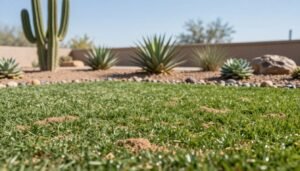
Phoenix yards also face desert conditions, low-water landscaping needs and seasonal turf care. Those details can shape the space around a fire feature as much as the fire itself.
A Phoenix yard’s rules, layout and soil deserve as much attention as the fuel choice.
Key Takeaways
- Gas suits homeowners who want easy, controlled use.
- Wood provides a traditional fire, but creates smoke and ash.
- Maricopa County restrictions can affect outdoor fires.
- HOA rules may set separate requirements for fuel or installation.
- Caliche and monsoon movement make drainage and a stable base important.
Gas vs Wood Fire Pit Phoenix: Which Choice Fits a Phoenix Yard?
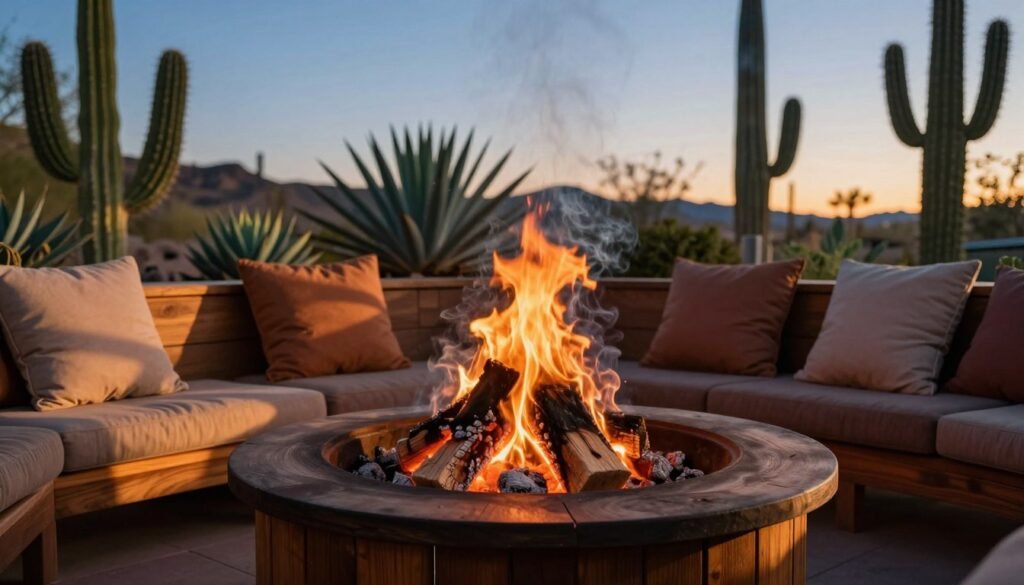
For the homeowner who values convenient, controlled use, gas is the stronger fit; wood wins when the traditional campfire experience matters more. Gas fire pits usually start easily, adjust quickly and avoid wood ash or wood smoke during normal operation.
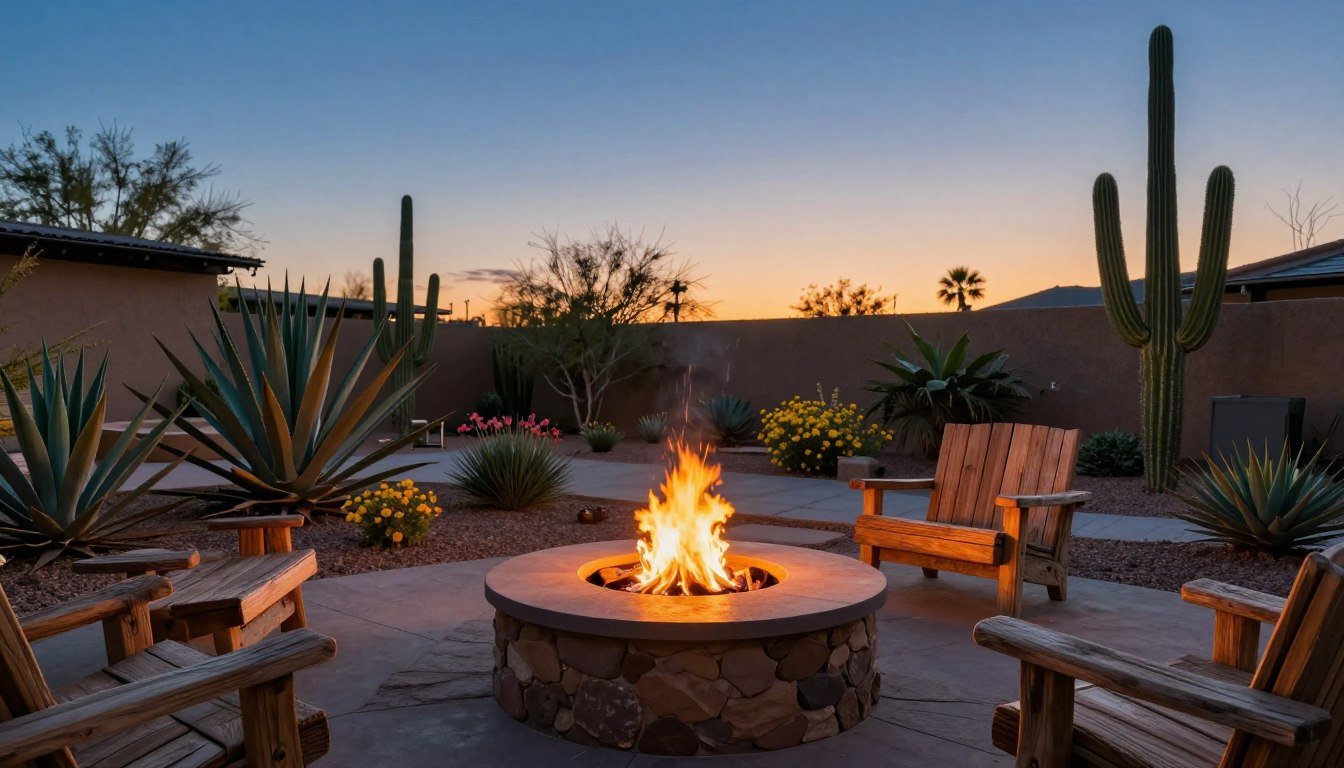
A wood-burning fire pit makes a different kind of gathering space. Burning wood gives you a crackle and aroma, but it also creates smoke, ash and more work after use.
| Factor | Gas fire pit | Wood-burning fire pit |
|---|---|---|
| Ignition and control | Starts with a control; flame adjusts or turns off | Needs kindling and tending; flame changes as wood burns |
| Smoke and cleanup | No wood smoke or wood ash during normal use | Produces smoke and leaves ash to clear |
| Ambiance | Steady flame without a wood-fire crackle | Crackle and aroma from burning wood |
| Tending and storage | Needs a gas supply, not a firewood stack | Needs dry firewood and attention while burning |
Wood smoke can bother people sensitive to smoke and neighbors nearby. It contains fine particle pollution and other pollutants that affect air quality and health, as the EPA’s wood smoke health guidance explains.
Choose gas for easy on-and-off control and less cleanup. Wood is the better fit when you value crackle, aroma and tending a live fire. Choose wood only if you are comfortable handling both the smoke and the cleanup.
What Are the Maricopa County Burn-Day Rules?
A Maricopa County No Burn Day can restrict outdoor recreational fires, so confirm the current rules before lighting a backyard fire. In 2026, restrictions cover outdoor burning for recreation and warmth, not just household fireplaces.
Rules differ by fire type and use. A gas fire pit is not automatically exempt from restrictions on outdoor burning.
No Burn Days and Outdoor Fires
On a Maricopa County No Burn Day in 2026, fireplaces, woodstoves and chimeneas cannot burn anything except gaseous fuels, including gas logs. That rule names those appliances, while outdoor recreational fires face separate restrictions.
When restrictions are not in effect in 2026, those fireplaces, woodstoves and chimeneas may burn gaseous fuels or clean, dry wood. Do not treat that allowance as year-round permission for every outdoor fire.
In 2026, the minimum fine for an illegal outdoor fire in Maricopa County is $200. Improper burning in residential fireplaces, chimeneas and woodstoves can bring fines from $50 to $250, based on the number of violations.
Check the current county burn notice before use. It can tell you whether restrictions apply on the day you plan to burn.
Cooking Fires on Restricted Days
A cooking fire may be allowed on a No Burn Day only when all listed conditions are met. The exception requires you to:
- Use gaseous fuel or clean, dry wood.
- Begin cooking as soon as the fire is established.
- Extinguish the fire as soon as the food is ready.
- Keep the fire at or below 2 square feet, unless a larger fire is needed to reach the safe internal temperature recommended by the Department of Agriculture.
These limits apply to cooking, not to a fire kept burning for warmth or atmosphere. Treat the cooking exception as conditional, not as general permission for a recreational fire.
What Does Installation and Operation Cost in Phoenix?
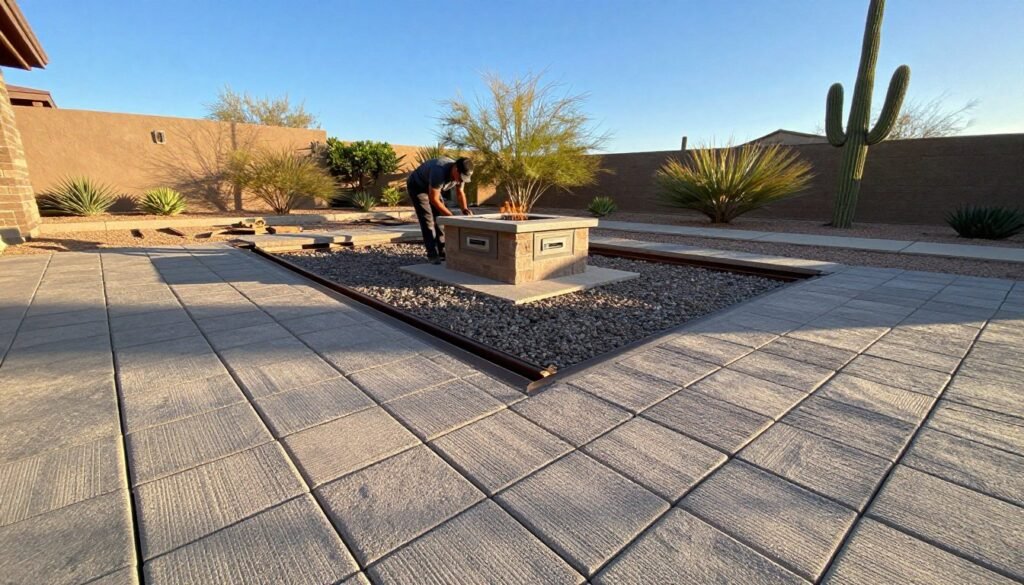
The project budget is shaped less by the fuel label than by the line, materials and yard work the installation needs. A fire feature, its finish and the route for a gas line can all change the upfront work.
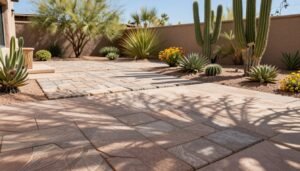
Site preparation also matters. A Phoenix lot with caliche soil may need careful base and drainage work to support a hardscape area.
Upfront Project Costs
Installed costs depend on the fire feature, finish materials, gas-line routing and hardscape work. A natural-gas setup may need a line routed from the home to the fire pit.
Phoenix-area pavers typically cost about $18 to $30 per square foot installed on a caliche lot. That range includes the base and drainage needed for the hard, water-shedding soil.
A project that uses existing hardscape has different needs from one that adds a new paved area. The site plan, finish choices and gas-line route shape the work.
Ongoing Fuel Costs
In July 2026, Arizona’s average residential natural-gas rate was $26.31 per thousand cubic feet (Mcf). That is a statewide average, not a Phoenix fire-pit rate.
Arizona’s estimated average residential natural-gas cost per customer was $22.96 per month in July 2026. That estimate uses statewide average prices and usage, so it does not predict an individual bill or fire-pit use.
Propane needs a tank supply, while wood needs a supply of dry firewood. Use the statewide gas figures as context only, not as a forecast of what a fire pit will add to a household bill.
What Should Phoenix Homeowners Check in Their HOA Rules?
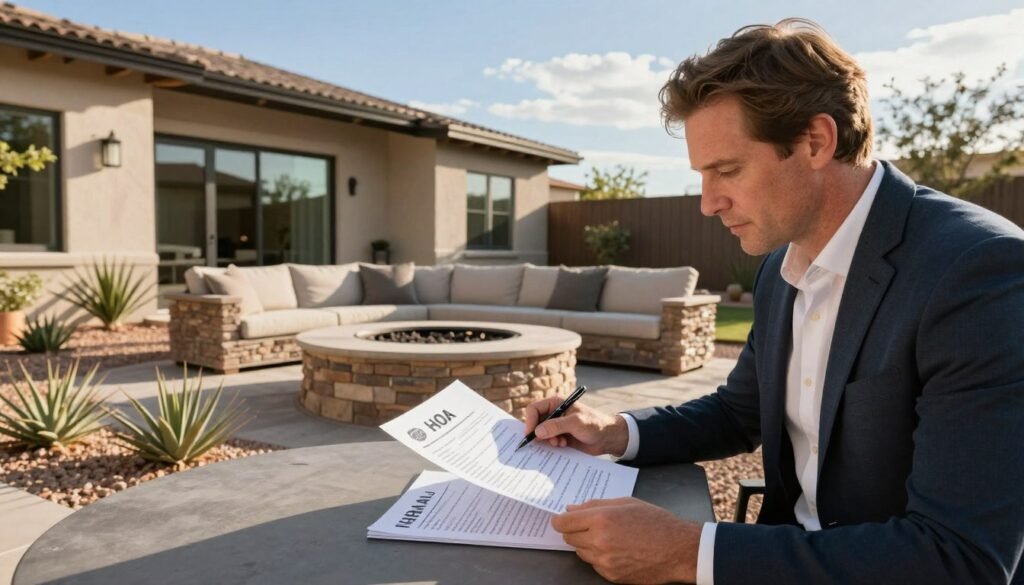
A Phoenix HOA may have its own approval process, so check the community documents rather than assuming either fuel is allowed. HOA rules come from each community’s governing documents, which can set separate requirements.
Fire pits require more than a fuel choice when the project changes a yard or adds a permanent feature. Check both the CC&Rs and architectural guidelines, since each may address different parts of the project.
- Read the CC&Rs for rules that may cover outdoor fire features.
- Review the architectural guidelines for design or construction requirements.
- Ask whether the fuel type, permanent installation, visible tank or design needs written approval.
- Get the decision in writing before construction.
Gas is not automatically approved, and wood is not automatically banned. The community’s governing documents set its requirements, while Maricopa County burn restrictions are a separate check.
Get written approval for the specific fuel and installation before committing to the build.
How Should a Fire Pit Fit a Phoenix Yard?
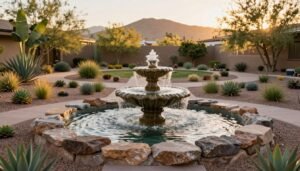
In a Phoenix yard, a fire-pit location has to account for both hard, water-shedding soil and seasonal ground movement. The local desert climate also affects planting, irrigation and turf care around the feature.
A stable base and a clear route for water help the fire-pit area fit the yard without disrupting nearby landscape needs.
Plan Around Caliche and Monsoon Movement
Caliche soil sheds water instead of absorbing it, and monsoon storms can cause the ground to swell and move. That makes drainage and a stable base important for a fire pit and its surrounding materials.
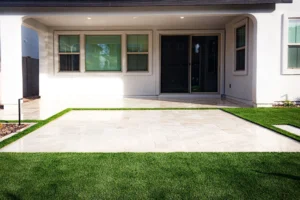
Plan around low-water plants and irrigation routes, so watering does not undermine the hardscape. If your yard has seasonal turf, include its care and access in the layout.
A well-planned fire-pit design also considers wind, nearby seating and the size of the usable area. Mark those areas before choosing the final spot.
Set Clearances Before Building
NFPA guidance for outdoor fires calls for at least 50 ft. (15 m) from any structure. Authorities having jurisdiction can require more distance based on site conditions.
Lay out the fire feature, seating and nearby structures before finalizing the design. Check how the planned materials and open space fit together, including routes through the yard.
A location that looks open on a sketch may feel crowded once you add chairs and paths. Confirm the proposed location against the applicable clearance requirements before construction begins.
Should You Choose Natural Gas or Propane?
Choose natural gas for a permanent setup with a suitable line, or propane when a tank-fed option better suits the location. Both can fuel a gas fire pit, but their supplies and placement needs differ.
Natural gas connects to a line from the home. Propane uses a tank at the fire-pit location, which can offer more flexibility when the design allows it.
| Consideration | Natural gas | Propane |
|---|---|---|
| Fuel supply | Home natural-gas line | Tank at the fire feature |
| Connection | Fixed connection to the line | Connection to a tank |
| Relocation | Permanent line limits movement | Tank-based setup can move when design allows |
| Ongoing task | No tank to refill | Check and refill or replace the tank |
A natural-gas line installation may require a professional to route the line to the location. The fire pit also needs a burner configured for the chosen fuel.
Match the Supply to the Yard
A fixed natural-gas connection suits a fire feature with a planned permanent home. A propane tank can fit a location where a new gas line is not part of the design.
Tank access matters for daily use. Make sure the tank can be checked and changed without blocking seating or the yard’s main path.
Do not assume a burner works with either fuel by default. Have the installer confirm the burner is configured for the fuel supply before the feature is put into service.
Conclusion
The right fit is the one that works with your preferred fire experience, local rules and actual yard conditions. Choose gas for controlled convenience or wood for a traditional fire, then check restrictions, HOA approval and site suitability before building.
A thoughtful layout can help the fire feature work with the rest of your outdoor space. Visit rtloaz.com to discuss a fire-pit plan with RTL Outdoor Services for your Phoenix-area outdoor space.