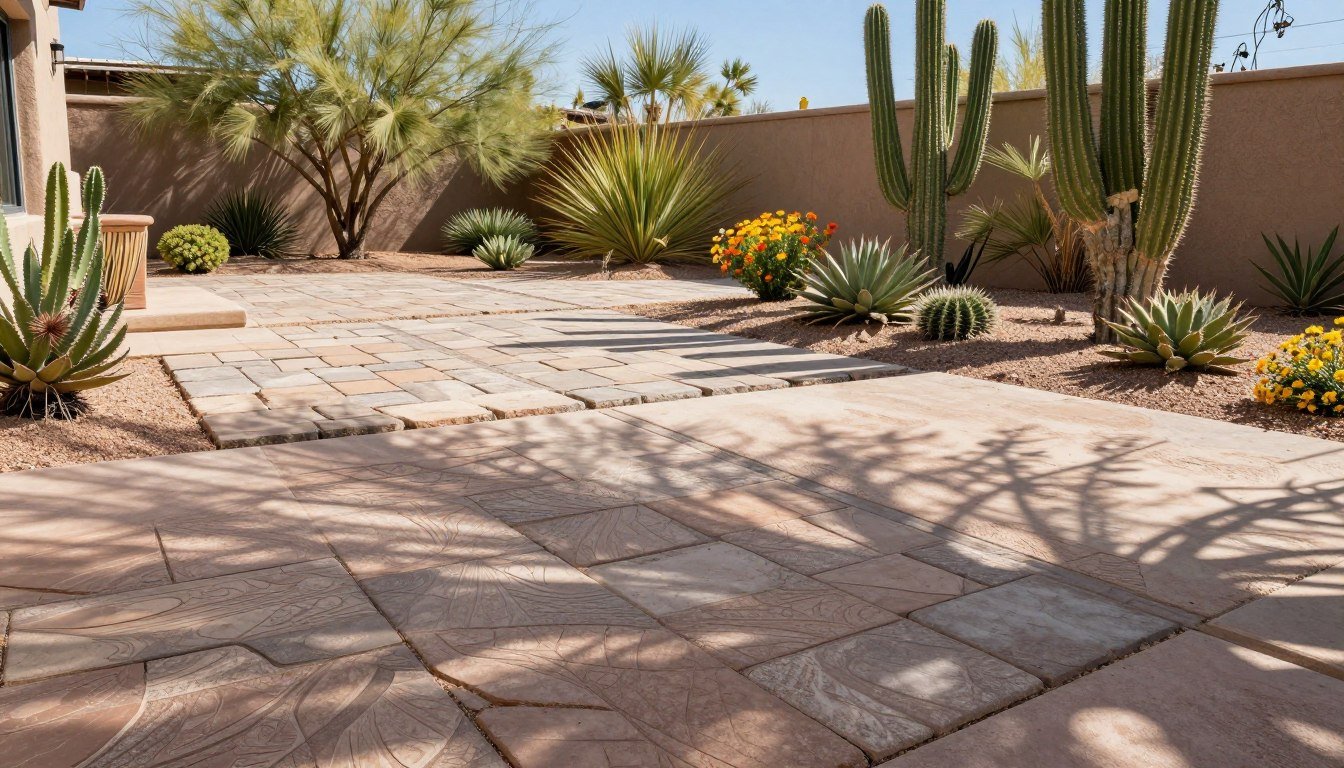
Pavers generally last longer in service because settled or damaged units can be addressed individually, while stamped concrete is often the lower-cost initial option. Could a poured surface still make more sense for your Arizona home, patio, or pool deck?
Stamped concrete is a poured slab imprinted with texture and color; pavers are separate units installed in a pattern. A control joint is a planned groove or gap that encourages a concrete slab to crack along a chosen line.
Material choice matters for patios, pool decks, and other outdoor projects in Arizona. The best fit depends on budget, appearance, maintenance, and how the space will be used.
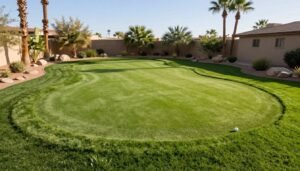
Low-water landscaping can reduce outdoor water use, but it does not remove the need to water plants. A patio beside low-water planting or seasonal turf still needs landscape care suited to its own watering needs.
Key Takeaways
- Pavers allow localized repairs and can remain in service for decades.
- Stamped concrete usually costs less at the start.
- Stamped concrete may need visible crack repairs or resurfacing as it ages.
- Color and sun exposure affect surface heat around pools.
- Base preparation matters for both materials.
Stamped Concrete vs Pavers Arizona: Which Costs Less Up Front?
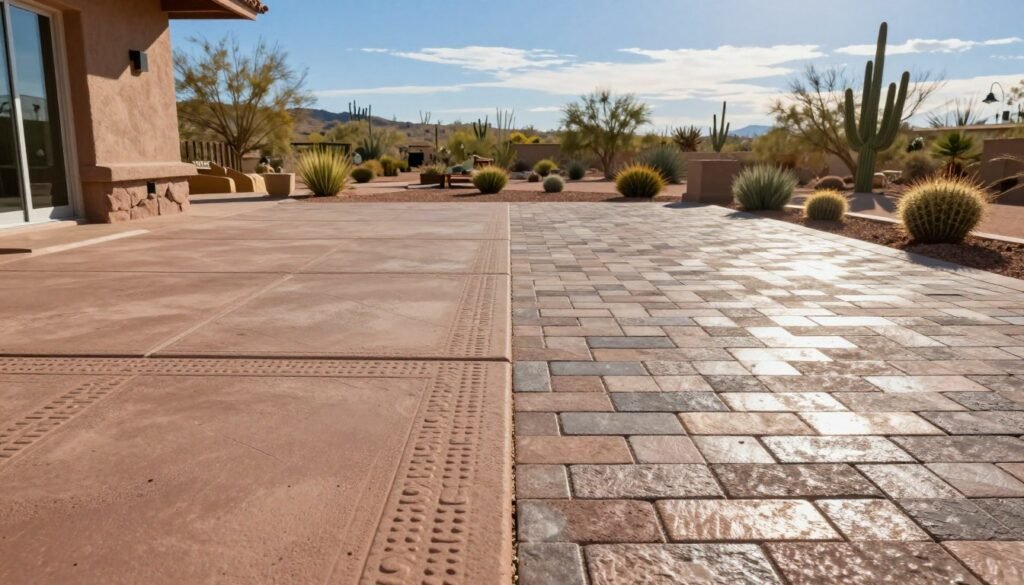
Stamped concrete has a $12-$22-per-square-foot installed planning range in Arizona, while Phoenix paver installation is estimated at $8-$26 per square foot in 2026.
Those ranges are not like-for-like quotes: one covers Arizona stamped concrete, and the other estimates Phoenix paver work. The price of stamped concrete vs. pavers in Arizona is best compared with geography and project scope clearly stated.
Installed planning ranges
Stamped concrete pricing includes color, stamp pattern, and initial sealer. The Phoenix paver range reflects a local estimate for 2026, not a promise for every project.
Stamped concrete vs. pavers cost in Arizona also depends on measured area and site conditions. Use these planning figures to frame questions, then compare detailed scopes.
| Cost item | Planning figure | Location or condition |
|---|---|---|
| Arizona stamped concrete installation | $12-$22 per square foot | Installed, including color and initial sealer |
| Paver installation | $8-$26 per square foot in 2026 | Phoenix estimate |
| Basic site preparation | $500-$1,000 in 2026 | Flat, accessible Phoenix lot |
| Caliche excavation | Added $500-$2,000 in 2026 | Phoenix excavation |
| Phoenix drainage | $200-$800 standard; $1,000-$3,000 complex or sloped | Curves, multiple elevations, or irregular paver shapes can add 15-25% |
Site conditions that add cost
Demolition, access, drainage, excavation, and design complexity can change the measured estimate. For example, a narrow gate may limit equipment, while a slope can call for more drainage work.
Compare proposals using the same scope, rather than relying on the final totals alone. Check whether each contractor counted disposal, base work, and the finish you selected.
- Demolition and disposal scope
- Excavation and base preparation
- Drainage and access allowances
- Selected material, color, and pattern
Ask for an itemized scope that identifies what is included before comparing two totals.
How Long Do the Two Surfaces Last in Phoenix?
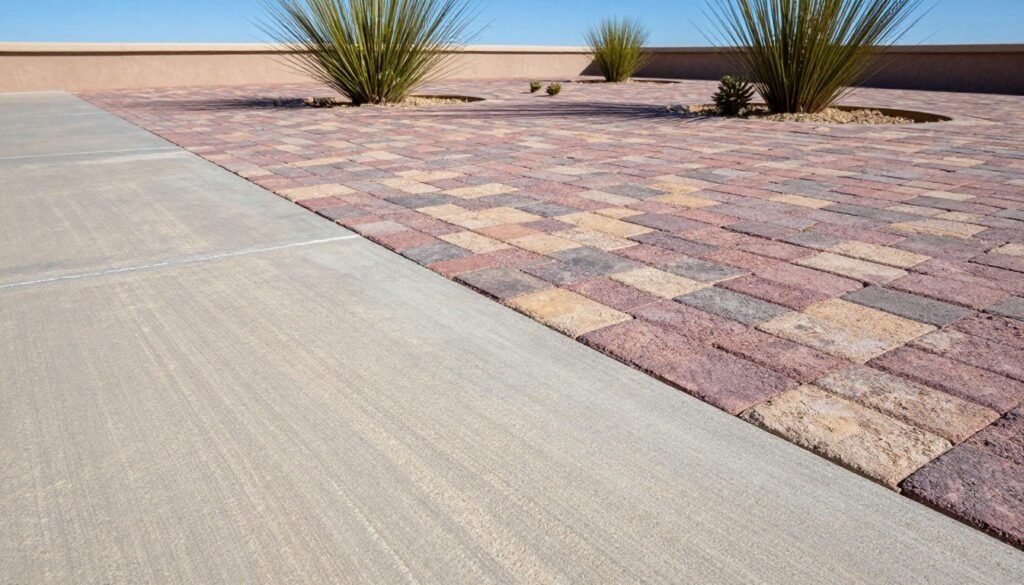
In Phoenix, stamped concrete commonly reaches 15-25 years before visible wear may prompt resurfacing or replacement, while pavers can remain in service for decades.
Neither material has a guaranteed expiration date. How it performs depends in part on soil movement, installation quality, and the condition of its base.
Appearance life versus service life
Stamped concrete is one continuous slab, so cracking can affect its appearance before the slab stops serving its purpose. Fading, worn sealer, or cracks may lead a homeowner to resurface or replace it.
That choice reflects the look and condition a homeowner wants, not proof that the concrete has completely failed. A slab can remain in use even when its finish shows age.
Separate pavers can stay in service for decades because wear in one area does not automatically call for replacing the whole surface. Individual units and sections can be addressed as needed.
How slabs and unit systems respond to movement
Soil movement can affect both materials, but they respond differently. A continuous concrete slab may develop cracks as it moves, while a paver layout can shift or settle in certain areas.
The surface is only part of the installation. Poor base work can lead to movement or uneven spots, even when the visible material is in good condition.
For either option, look beyond the finish when reviewing a proposal. Ask how the installer will prepare the ground and build a stable base for your patio.
Treat the quality of the prepared base as a key part of either material’s expected performance.
What Maintenance and Repairs Should You Expect?
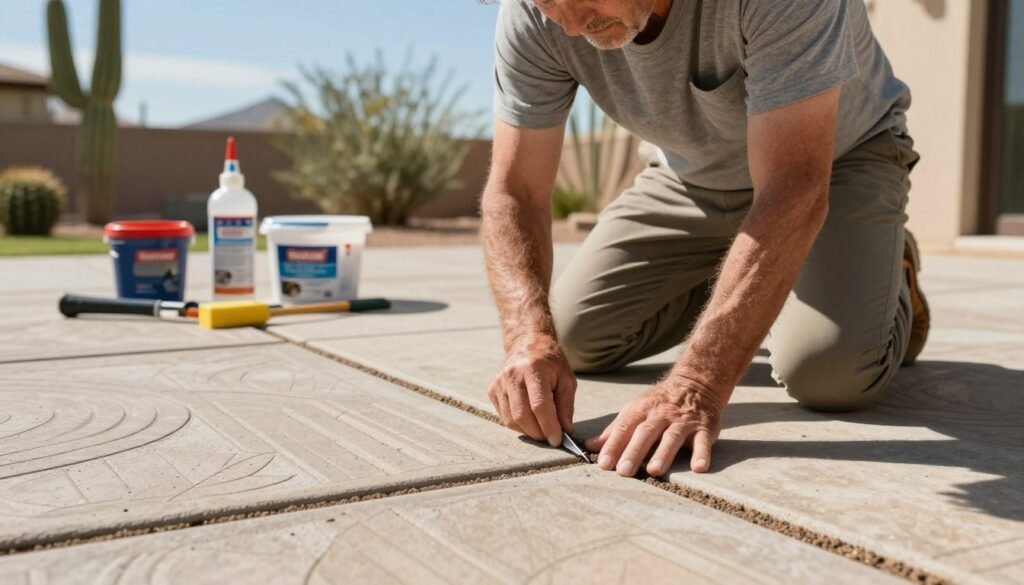
Stamped concrete typically needs resealing every 3-5 years in Arizona, while a damaged paver can be replaced without repairing a whole slab.
Each surface has routine care needs, but repairs differ because one is a continuous slab and the other uses separate units.
Resealing stamped concrete
Arizona stamped concrete is typically resealed every 3-5 years. Each resealing is estimated at $1.50-$3.50 per square foot, depending on the area being treated.
Sealer helps protect the finish and maintain its appearance. The surface should be clean before resealing, and the work needs to suit the existing stamped finish.
Cracks can be hard to patch without a visible difference in color, texture, or pattern. Even careful work may leave a mark because the original finish runs across one continuous slab.
Resetting and replacing pavers
A damaged paver can be lifted and replaced with another unit. If an area has settled, an installer can lift it, re-level the base, and reset the units.
That approach can limit work to the affected area, but it does not make pavers upkeep-free. Check the joints and replenish joint sand when it has washed away or dropped below the joint surface.
Leaves, dirt, and spills can also affect the surface, so routine cleaning still matters. A replacement unit may stand out if its color or finish differs from the original.
Keep spare pavers from the original installation when possible so a future replacement has a better chance of matching.
How Do Arizona Heat and Monsoon Rain Affect Each Surface?
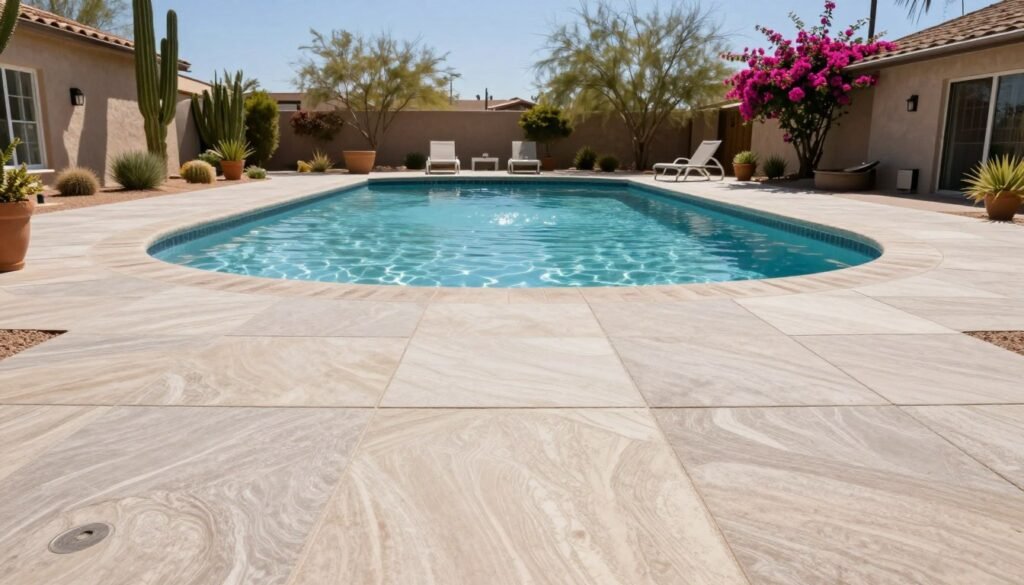
In direct sun, lighter-colored pavers generally stay cooler than dark-colored pavers, but any surface can become uncomfortable underfoot in Arizona heat.
Color and shade affect surface heat, so one material name cannot predict how a specific patio or pool deck will feel.
Barefoot heat in direct sun
Lighter pavers reflect more sunlight and absorb less heat than dark-colored pavers. Direct sun, shade, and the chosen color all matter when people walk barefoot.
A Phoenix pilot found asphalt reached surface temperatures up to 152°F at midday. Its reflective cool pavements measured 10-16°F cooler, though those findings do not compare patio materials directly.
A five-year review found most pavement-burn cases occurred when air temperatures reached 95°F or higher, with risk rising sharply above 105°F. A lighter road section also measured about 30°F cooler than a darker section in thermal imaging.
The Phoenix cool pavement pilot examined reflective coatings on roads, not stamped concrete or pavers in a backyard.
Monsoon runoff and permeable systems
Arizona monsoon storms can bring intense rain in a short time. Permeable pavers let water pass through wider joints into an open-graded aggregate base and the ground below.
Some systems add an underground storage layer to hold rainwater for later use on the property. The system still needs drainage planning that fits the yard and soil.
For material ideas suited to Arizona patios, poolside areas, and driveways, explore paver choices for Arizona’s climate.
For pool-deck use, consider the actual color and sun exposure rather than assuming that the material name alone predicts comfort.
How Do Color, Pattern, and Yard Layout Affect the Look?
Stamped concrete creates a continuous patterned surface, while pavers make the joints and individual unit shapes part of the design.
Stamped concrete can imitate stone, brick, or tile through its imprint and color. Pavers are separate units, often made from concrete, brick, or natural stone.
Those units come in many shapes, colors, textures, and patterns. Their joints form part of the layout, rather than signaling a defect.
Think about how the surface meets steps, walls, planting beds, and doors. A pattern that works in a wide patio may feel crowded on a narrow path.
A later extension can be harder to match if the original color or pattern has changed. A continuous stamped design can also be difficult to extend without a visible seam or difference.
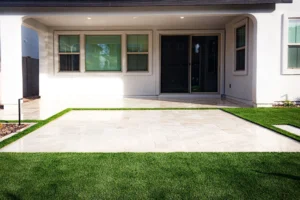
Before choosing, consider how the patio fits into the whole yard. Low-water planting beds need space for plant care, and seasonal turf care may require clear access along the hardscape edge.
For ideas about how patio materials fit with features and outdoor space, see patio design and material options in Phoenix.
- Choose between a seamless and jointed appearance.
- Review color and texture samples in the yard’s light.
- Plan borders and any future extension.
- Coordinate hardscape edges with low-water planting beds and access needed for seasonal turf care.
Check how the selected finish looks beside the home and existing landscape before settling on a pattern.
Which Surface Fits a Patio, Pool Deck, Driveway, or Walkway?
Pavers are the stronger fit when localized repair matters, while stamped concrete can fit a tight initial budget or a deliberate monolithic design.
Each project has different demands, so the best match can change from one part of the property to another.
Concrete pavers, brick pavers, and natural stone pavers are distinct material choices. Travertine is one natural-stone option, but not every type suits every site.
The table shows where each surface may fit based on use and homeowner priorities. A paver layout can offer a repairable unit system, while stamped concrete gives a poured, continuous look.
| Project type | Paver fit | Stamped-concrete fit |
|---|---|---|
| Driveway | Repairable unit system | Lower initial cost; slab can crack |
| Pool deck | Light-colored units offer a cooler-in-sun option | Continuous poured appearance |
| Patio or entry | Repair by area | Monolithic look |
| Walkway or utility access | Lift units for access | Straightforward poured surface |
For a driveway, pavers win when the homeowner values a unit system that can be repaired by area. Stamped concrete still fits when a lower starting cost matters more, though the slab can crack.
Pool decks call for attention to finish, sun, and footing. Natural stone or travertine pavers may suit some pool areas, while other sites need different materials or details.
Concrete pavers are one common option for patios and driveways. Brick and natural stone offer other looks, but site needs and intended use should guide the choice.
Choose by how the surface will be used and which tradeoff matters most on that part of the property.
Conclusion
If long-term repairability is the priority, pavers are usually the more practical choice; stamped concrete can still fit when upfront cost or a continuous look matters more.
Before seeking advice, gather the project dimensions, intended use, finish preference, and any concerns about access, drainage, or the yard’s layout.
Those details help make the conversation specific to your outdoor space. Consider which tradeoff matters most before settling on a surface.
Visit rtloaz.com to request a project consultation for your Arizona outdoor space.