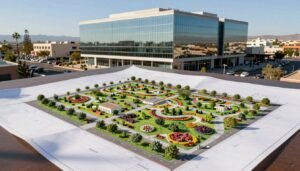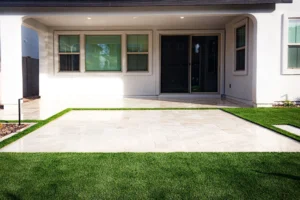
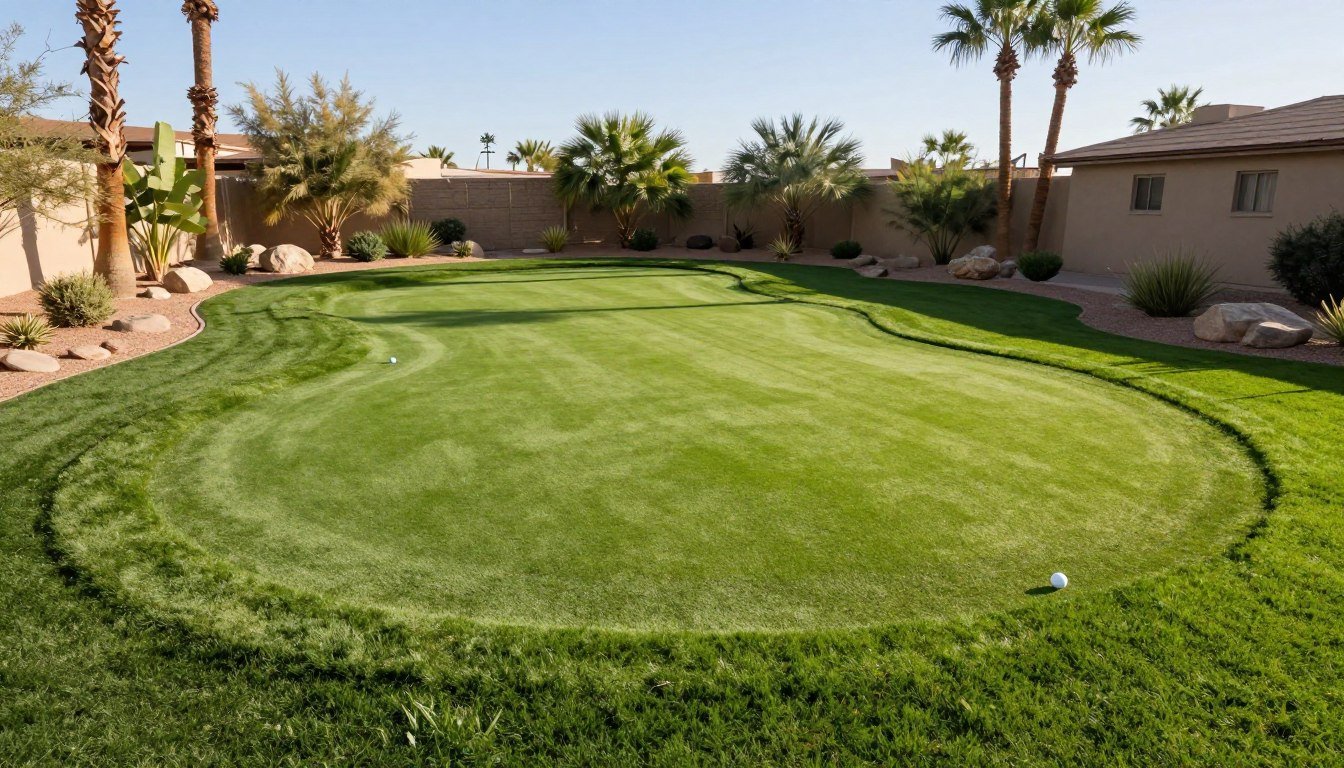
A professionally installed backyard putting green in Phoenix costs $9.00-$20.00 per square foot, with a $2,500 project minimum. Size, turf choice, base preparation, drainage, and design shape the final cost.
Phoenix’s desert climate makes low-water landscaping an important choice for many homeowners. A synthetic putting turf can offer a practice space without living grass, but it still needs suitable construction and care.
Your yard’s slope, soil, and access can affect the work needed before installation. Your choice of shape and practice features also changes the project. A useful estimate starts with the yard’s actual conditions and the kind of practice surface you want.
Key Takeaways
- Phoenix project budgets depend on green size, turf grade, site work, and design.
- Putting-green turf pricing is different from lawn-turf pricing.
- A compacted aggregate base supports a stable surface and helps manage water.
- Cup locations and the green’s shape should suit your practice goals.
- Compare written quotes by the work and materials each one includes.
- Some artificial turf may fit a Phoenix grass-removal project, subject to program rules.
Backyard Putting Green Cost in Phoenix
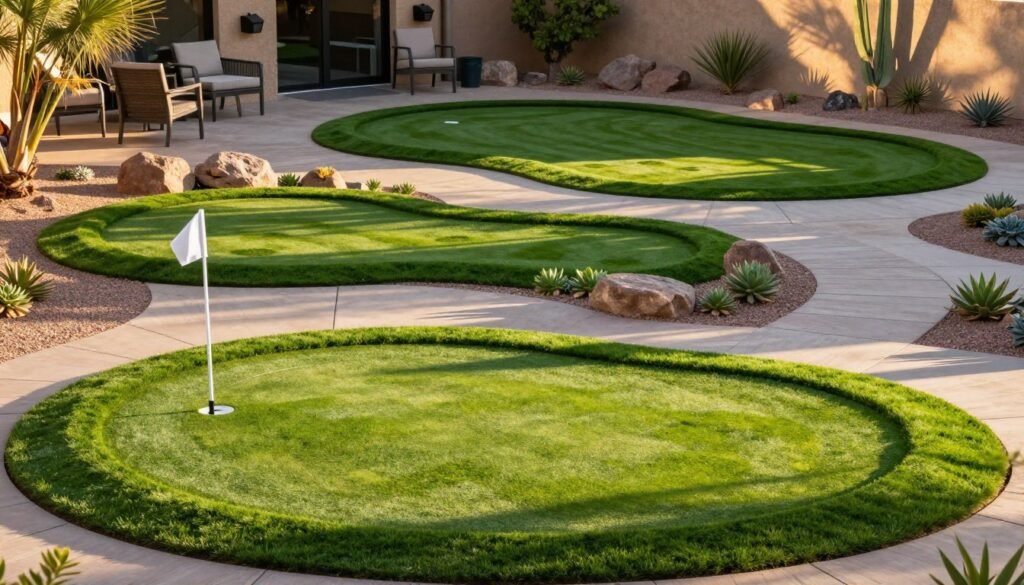
Phoenix project budgets run from $3,000-$8,000 for a small green to $16,000-$40,000+ for a large one, with the middle size band between them. These bands help you set a starting budget, not predict an exact quote.
Green size is a useful first planning measure, but two projects with similar footprints can need different work. Use the area you plan to cover, then compare what each estimate includes.
| Typical project size | Square footage | Typical project budget |
|---|---|---|
| Small | 200-400 square feet | $3,000-$8,000 |
| Medium | 400-800 square feet | $8,000-$16,000 |
| Large | 800-1,500+ square feet | $16,000-$40,000+ |
The typical project budget bands give you a better planning reference than multiplying a single rate by your square footage. A putting green includes more than turf, and the work can vary across yards.
Arizona Turf Masters lists artificial turf lawn installation in Phoenix and Tucson at $6.00-$12.00 per square foot, with minimums applying. That rate describes lawn installation, not a putting-green quote.
A putting green cost calculator can help you record an intended area and compare rough project sizes. Measure the planned footprint, including any fringe, but do not treat simple multiplication as a final price.
The actual site may call for different preparation or shaping than a calculator assumes. Ask for an itemized estimate based on an on-site review, so you can see how the proposed work fits your yard.
Use the size bands to set a planning budget, then judge the quote against the work included.
Which Materials and Features Change the Price?
Turf grade, excavation, cups, and fringe can all change the quote independently of the green’s footprint. Turf-only pricing does not cover every part of a finished installation.
Ask for separate line items, since component rates describe distinct work and should not be added to the full installation range. The quote should show what materials and labor each amount covers.
Turf grade and fringe
Putting-green turf prices are commonly listed at $8-$12 per square foot for economy turf, $12-$18 for mid-grade turf, and $18-$25 for premium nylon turf. These are turf prices, not complete installation prices.
Fringe adds a different turf area around the putting surface, so it increases both material needs and the footprint being covered. Fringe turf usually adds $2-$4 per square foot as a separate line item.
Ask how the selected turf suits your practice goals and how the estimate counts fringe. Infill, the loose material worked into turf fibers, also belongs in the material and labor scope.
Excavation, edging and cups
Base preparation and excavation are listed at $3-$6 per square foot, with higher costs possible where caliche makes digging harder. That charge uses area, not edge length.
Edge restraints are priced by linear foot, commonly at $3-$5 per linear foot. Cups and holes are priced per cup, commonly at $150-$300 each.
Those units matter when you compare quotes. A long, narrow green may need more edging than a compact shape with the same area, while additional cups add their own per-cup charge.
Layout, waste and installation scope
Turf rolls come in 15-foot widths, so layout planning affects cutting, seams, and material waste. The shape and roll direction can change how installers place and join sections.
Labor covers fitting the turf, joining seams, trimming edges, and working infill into the fibers. One lawn installer includes up to 3 inches of base material in each lawn installation and lists preparation at $1.00 per square foot.
That is one company’s stated scope, not a Phoenix-wide rate or a putting-green specification. Check these four quote components: turf grade, base and excavation, edging and cups, fringe and infill.
Ask for each component to be priced and described separately so a low turf rate does not conceal omitted work.
How Do Caliche and Monsoon Rain Affect the Base?
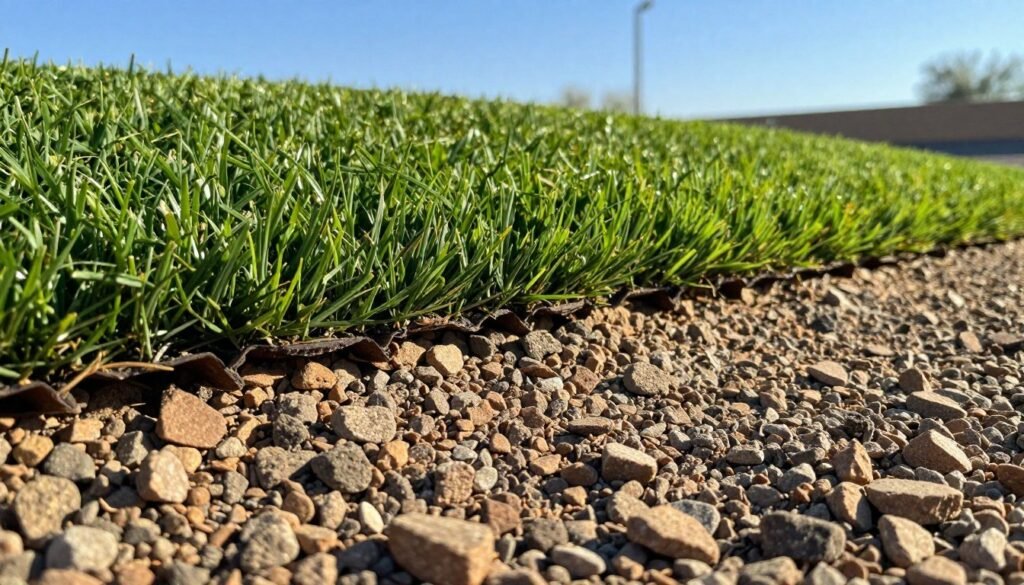
Rain can pass through permeable turf systems, but the yard drains well only if the base and underlying soil also carry water away. Turf permeability alone cannot show how quickly the whole site will drain.
A compacted aggregate base is a layer of crushed rock compacted to form a stable, draining foundation beneath the turf. Its depth, slope, and connection to the site’s drainage route all matter.
Excavating and compacting over caliche
Caliche in Phoenix may sit a few inches below the surface or several feet down. Standard artificial-turf preparation calls for 3-4 inches of compacted crushed aggregate.
A putting-green installation may need 4-6 inches of soil excavation, and hard caliche can require heavy equipment to break through. The actual depth depends on site conditions and the planned construction.
Installers excavate as needed, place crushed rock, grade it for slopes and breaks, then compact it before laying turf. The result needs to support the surface and direct water toward a workable outlet.
Designing a drainage path for intense rain
Phoenix monsoon storms can deliver 2-3 inches of rain in under an hour. A drainage plan needs to account for runoff across the green and the conditions beyond its edges.
ASTM F2898 measures vertical water permeability through a turf system, including fibers, infill, and backing. The test reports results in inches per hour, and turf systems commonly test at 30-120 inches per hour.
Fully permeable or perforated sports backings can exceed 150 inches per hour and often exceed 200. Those figures do not predict drainage through the aggregate base or native subgrade beneath the turf.
So, can you lay turf over dirt? No. Prepare and compact a suitable base, with grading and drainage suited to the soil and site.
Have the installer identify the drainage route and explain how the base and subgrade will handle intense monsoon runoff.
What Size and Design Make Sense for Your Yard?
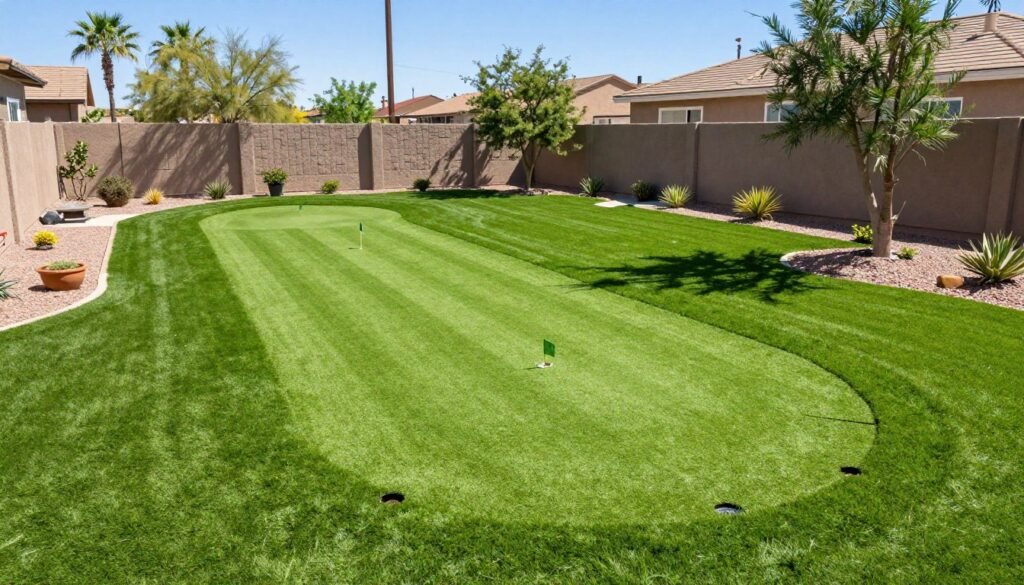
A useful design fits the practice you actually want, rather than simply using every open patch of yard. The footprint should leave room for access and suit the way you plan to use the green.
A compact area can support short putts and repeat drills, while a wider layout can create more varied lines. Keep the shape usable instead of filling the yard with turf just because space is available.
Match the footprint to the practice you want
Start with the practice you value most, such as short putts, longer rolls, or changing directions. Then look at the available yard area, nearby features, and clearances around the proposed green.
Backyard putting green ideas can be simple: a compact shape with a few useful lines, or a more varied outline with room for several approaches. The layout should leave a clear route to the green and avoid awkward edges.
Access also affects design. A narrow gate, steps, or a tight side yard may affect how crews reach the site and move materials into place.
Custom Phoenix-area putting green layouts can account for yard shape, contours, placement, and landscape edges. Those choices help the surface fit the setting rather than forcing the yard around it.
Choose cup positions and ball speed
Most greens have 3-6 cup locations, which create different practice lines across the same surface. Place cups where you can approach them from more than one direction.
Regulation cups are 4.25 inches in diameter and 4 inches deep. Treat those dimensions as a design reference, not a promise that every synthetic surface will play like a course green.
Synthetic putting greens are listed at a Stimpmeter range of 9-11. The Stimpmeter measures ball roll, but the number alone cannot guarantee the feel or performance you will get.
Ask how the proposed shape and cup positions support your practice. Mark the proposed footprint and cup locations on the ground before committing to contours or decorative features.
Is DIY or an Indoor Mat a Better Fit?
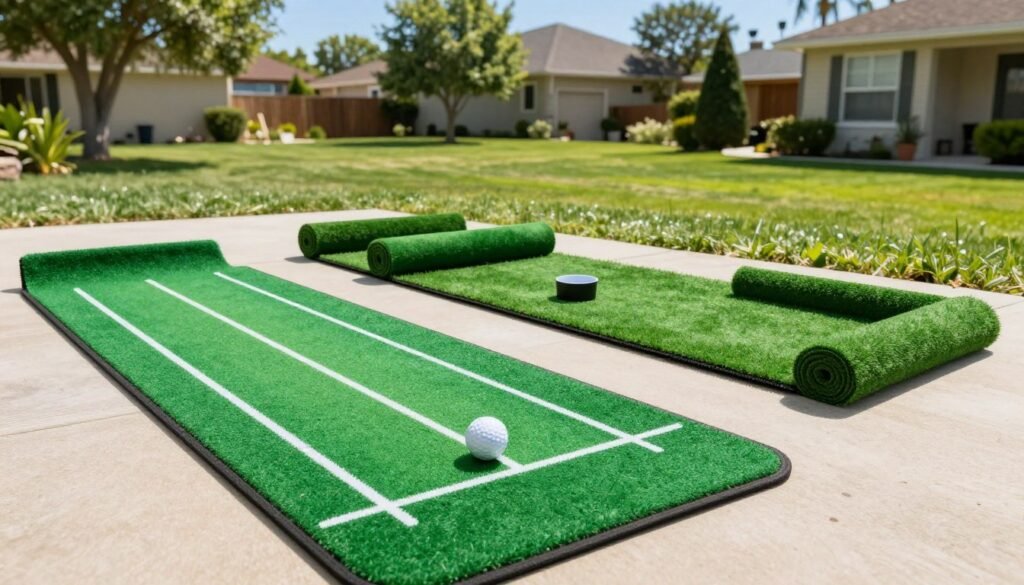
DIY kits reduce the need to hire an installation crew, while indoor mats avoid outdoor excavation altogether. Each option fits a different practice space and level of work.
Outdoor DIY kits cost $500-$3,000. They can lower labor costs, but you take on excavation, compaction, cutting, seams, and drainage work.
Outdoor DIY versus professional installation
DIY may suit a simple layout and a homeowner prepared to manage each construction step. Poor grading or an intricate shape can make the work harder to control.
Professional installation is the more reliable route for difficult grading or complex shapes. Indoor mats are a separate choice, not a substitute for an outdoor base and drainage system.
Prices below are listed product prices, not a promise of current stock or availability. Compare the dimensions and practice features with the space you have.
Indoor mats for limited space
| Mat or model | Listed price | Size or width | Practice feature |
|---|---|---|---|
| PrimePutt Essential / Standard | $299 / $499 | 18 inches / 3 by 9 feet | One cup / three regulation cups |
| Perfect Practice Standard | $129.99 | Not specified | Two holes and ball return |
| SKLZ Accelerator Pro | $54.99 | 9 feet by 16.25 inches | Guides at 3, 5, and 7 feet plus ball return |
| PuttOUT Medium | $79.99 | Not specified | Rubber-backed for small spaces |
| Wellputt 13ft Performance | $189 | 13 feet | Two speeds and app drills |
The PuttOUT format suits a small space, while SKLZ offers alignment guides for distance practice. PrimePutt Standard provides three cups for practicing different lines.
Wellputt offers two speeds and app drills if varied practice is useful. BirdieBall RollTech mats are labeled for indoor use only because sunlight can damage them.
Keep an indoor-only mat out of direct sunlight, and do not use one as an outdoor installation system.
Is Synthetic Turf Low-Water and Low-Maintenance?
Synthetic turf can reduce the irrigation and mowing associated with living grass, but it brings different care and exposure considerations. Lower watering needs do not mean that every use of water disappears.
Maintained Bermuda grass and cool-season overseeded lawns in the Phoenix metro need 55-75 inches of supplemental irrigation each year. Synthetic turf does not need that kind of irrigation to stay green.
Water use compared with living grass
You may still use water to clean the surface or manage dust, depending on the setting and care plan. The main difference is that synthetic turf does not need regular watering to support living blades.
Some homeowners may prefer the look and feel of natural grass or dislike caring for infill and surface wear. Those preferences can shape whether a synthetic surface feels convenient over time.
Heat and chemical exposure questions
Artificial turf raises questions about heat and chemical exposure, including potential PFAS and microplastic contamination. Research remains inconclusive, with gaps in knowledge about children’s oral and skin exposure.
Examined artificial turf surfaces had higher surface and head-height air temperatures than natural grass, regardless of infill type. Temperatures above 160 degrees Fahrenheit have been recorded on recycled-rubber play surfaces during hot summer days.
That recorded figure applies specifically to recycled-rubber play surfaces. It should not be treated as a temperature reading for every putting green or turf system.
Routine care and service life
Routine care can include removing leaves and debris, brushing fibers, and checking infill. Follow the care steps for the installed system, since materials and use can differ.
A properly built artificial turf system can last 10-15 years, depending on construction and care. Heavy use, wear, and your preferred level of upkeep may affect how satisfied you feel with it.
Ask how the proposed system handles heat, cleaning, infill, and replacement before treating low maintenance as maintenance-free.
What Should a Written Installation Quote Include?
A useful written estimate specifies the work beneath the turf as clearly as the visible surface. It should name the materials, labor, and site tasks included in the project.
For backyard putting green installation near me, compare on-site assessments and itemized scopes. Similar-looking totals may cover different preparation, materials, or cleanup.
Confirm the scope and site work
Use this five-item checklist to review what the contractor plans to do:
- Excavation and haul-off
- Aggregate depth and compaction
- Drainage and grading
- Turf, infill, seams, and edging
- Cups, fringe, access, and cleanup
Check that the written scope matches the layout you discussed. Note any areas, materials, or tasks that the estimate excludes, so you can compare the full project accurately.
Compare the schedule and contractor details
A Phoenix putting-green installation typically takes 4-7 days, depending on size and complexity. Site access and the work required can affect the schedule.
Ask when work is expected to start and finish, and how the crew will handle access to the yard. Confirm contractor licensing details with the Arizona Registrar of Contractors, the state authority for licensing information.
Do not approve a quote until the included work, exclusions, schedule, and contractor details are clear in writing.
Can Phoenix’s Grass Removal Program Help?
The Phoenix program may help with eligible grass removal, but applicants must receive approval before beginning work. It offers $2 per square foot for qualifying grass removal, not guaranteed funding for a putting-green installation.
Program eligibility rules require at least 250 square feet of living, healthy grass at 75% density. Applicants must own the property and receive a Phoenix Water Services or City of Phoenix services bill.
Check these main conditions before planning the work:
- Get approval and a Notice to Proceed before removal starts.
- Finish the project within six months of the Notice to Proceed date.
- Do not leave bare soil; some artificial turf may form part of the new landscape.
- Projects over 5,000 square feet are reviewed case by case, funds permitting.
Confirm current eligibility and receive the Notice to Proceed before scheduling removal.
Conclusion
A successful plan starts with a putting surface sized for your yard and built for its soil and drainage conditions. Your practice goals should guide the shape, cups, and turf choice.
Before deciding, consider how the surface will fit your routine and the care you are willing to provide. A site-specific design can help you weigh those choices alongside the work needed beneath the turf.
Share your project details with RTL Outdoor Services through its Phoenix-area putting greens page. Visit rtloaz.com to discuss your Phoenix-area project with RTL Outdoor Services.