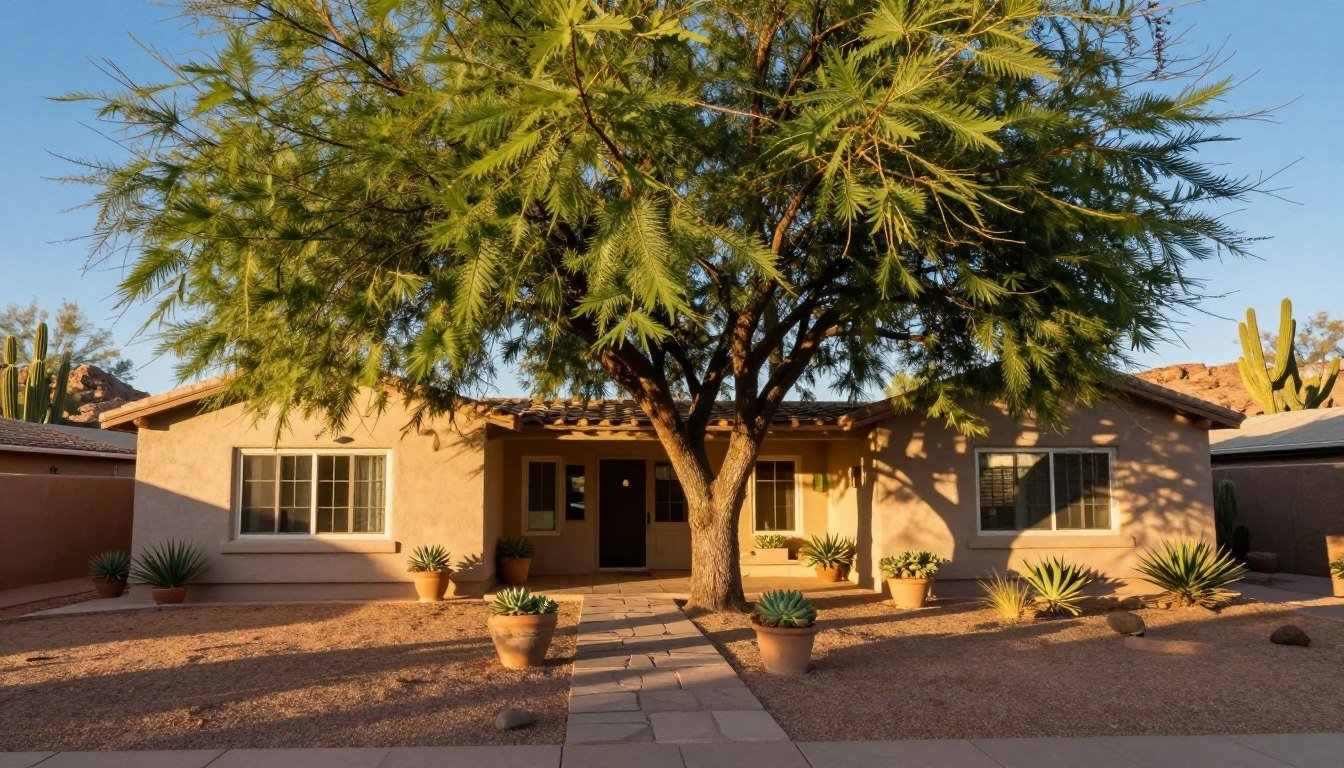
For most Tempe yards, Desert Museum palo verde is a strong low-water choice, while desert willow suits smaller flowering spaces and live oak suits yards where dense shade matters most.
Fall is the preferred planting season, and spring is the second choice. Tempe’s hot, arid climate makes a tree’s fit with your home and yard especially important.
Could the wrong tree turn a sunny patio into a crowded, thirsty corner? Match the species to the space and the shade you want before bringing one home.
A canopy is the leafy crown and branching spread of a tree. Its mature size, water needs, and upkeep matter long after the tree leaves the nursery.
Key Takeaways
- Desert Museum palo verde offers low-water, filtered shade.
- Desert willow suits smaller yards that need flowering shade.
- Live oak offers deep shade but needs substantial room.
- Fall is the best planting season in the Phoenix area.
- Choose a tree that fits your yard as it grows.
A tree’s mature canopy and water needs should fit the site, not just the nursery container.
How Should You Match a Shade Tree to Your Tempe Yard?
Begin by measuring the planting area and deciding whether you want deep shade or a lighter, filtered canopy. Those choices help narrow the trees that fit your yard.
Tempe landscapes also vary in sun, drainage, and soil. A tree that suits one space may struggle in another.
Start with Mature Spread and the Shade You Need
Measure the usable space, then compare it with a tree’s mature spread. Desert Museum palo verde can reach 25 feet tall and 25 feet wide.
Desert willow grows 15-35 feet tall, and its width can equal or exceed its height. That broad shape may be a poor fit beside a narrow path or small patio.
Dense shade blocks more sun; filtered shade lets some light through. Check whether a mature canopy can clear walls, paving, and overhead space.
Match Water Needs to Soil and Yard Conditions
Most of these trees need full sun, but drainage and irrigation access still matter. Check how quickly water drains and look for caliche, a hard layer of soil.
Compacted soil or hardpan can limit root growth and hold water where roots need air. Choose a planting site with workable soil and a way to water it.
For compact yards, assess desert willow and Desert Museum palo verde. The willow can grow wider than it is tall, so check its spread carefully.
Well-planned plantings can also add structure and comfort around outdoor spaces. Explore plantings for Tempe outdoor spaces for more landscape ideas.
Compare the tree’s expected spread with the usable planting space before settling on a species.
Best Shade Trees Rempe AZ Homeowners Should Consider
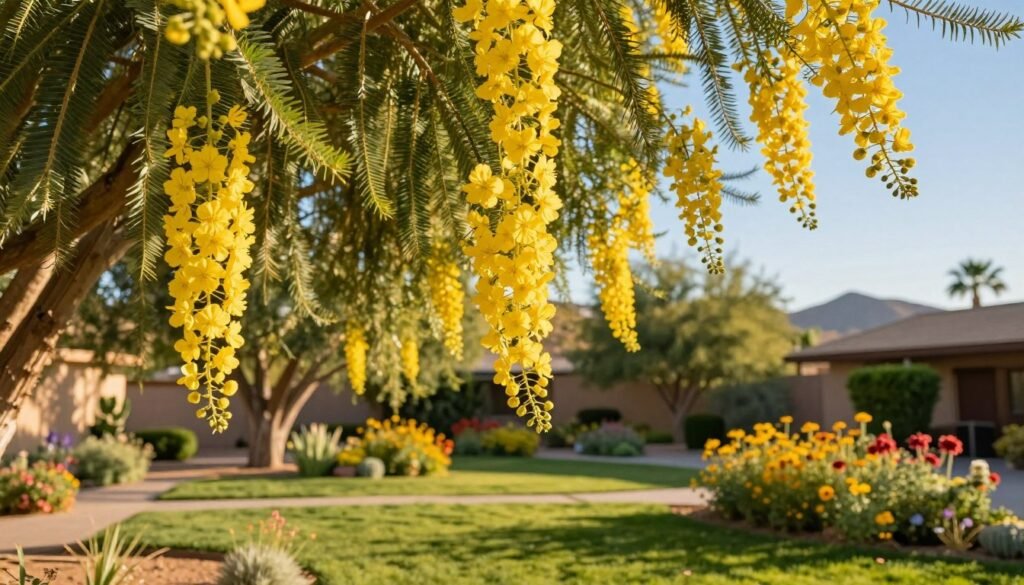
For a typical Tempe yard seeking low-water filtered shade, start with Desert Museum palo verde. It suits full sun and offers a balance of shade and modest water needs.
Tempe homeowners looking for the best trees for Phoenix, AZ, can also weigh flower display, shade depth, and available room. These three options meet different yard needs.
- Desert Museum palo verde: best all-around low-water shade tree for a light, airy canopy.
- Desert willow: flowering shade for smaller spaces, with room for its branching spread.
- Live oak: dense, deep shade for properties with substantial space.
Desert Museum palo verde prefers full sun and well-drained soil. Its trunk and stems stay green year-round, and yellow flowers bloom in spring.
Supplemental summer watering may lead to another bloom. The tree’s open canopy creates a lighter shade than a broad, dense tree.
Desert willow has trumpet-shaped flowers in white, pink, and deep lavender. Long summer fruits hold seeds, and the flowers attract bees and hummingbirds.
Supplemental summer water helps desert willow grow well and form denser foliage. Its flowers bring seasonal color, while the seeds and fruits may add cleanup.
Live oak grows 40-80 feet tall and spreads 60-100 feet wide. Once established, it tolerates drought and casts deep shade with dense foliage.
For an Arizona shade tree that handles low water, palo verde is a strong choice; choose other forms for deeper shade or flowers.
Choose live oak only when the yard can accommodate a canopy that may spread 60-100 feet.
Which Fast-Growing Shade Trees Can Establish a Canopy Sooner?
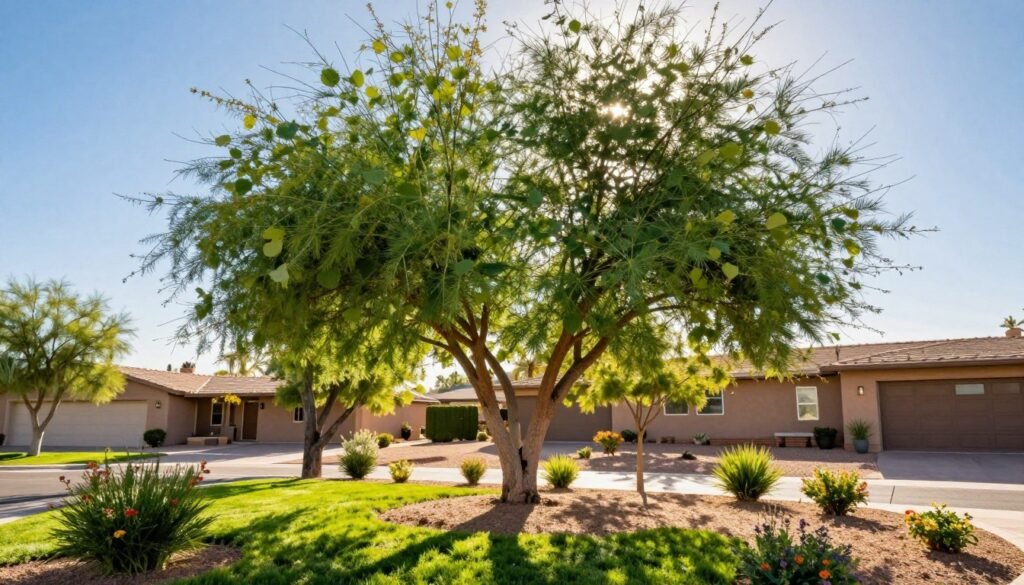
In good Phoenix-area conditions, Tipu leads these listed options at about 3-6 feet of growth per year. Actual growth depends on site conditions and how well a tree establishes.
These rates describe favorable Phoenix conditions, not a guaranteed shade timeline. Fast-growing shade can be useful, but speed alone does not make a tree a good fit.
| Tree | Annual growth in good Phoenix conditions | Useful site or canopy trait |
|---|---|---|
| Tipu | 3-6 feet | Mature height of 40-50 feet |
| Sissoo | 3-5 feet | Semi-evergreen, up to 60 feet tall |
| Willow acacia | 3-5 feet | Narrow form, about 30 feet tall and 20 feet wide |
| Desert willow | 2-4 feet | Flowering small-tree choice |
| Desert Museum palo verde | 2-3 feet | Filtered shade for full sun |
Bonita ash grows quickly, reaches about 30 feet tall and wide, and thrives in full sun. Arizona ash is a fast-growing deciduous option about 30 feet tall.
Fast growth can bring weaker wood and more pruning. A tree may also outgrow its space before it provides the canopy you want.
Check the mature footprint before choosing a fast grower for a tight yard.
Which Desert Trees Need the Least Water Once Established?
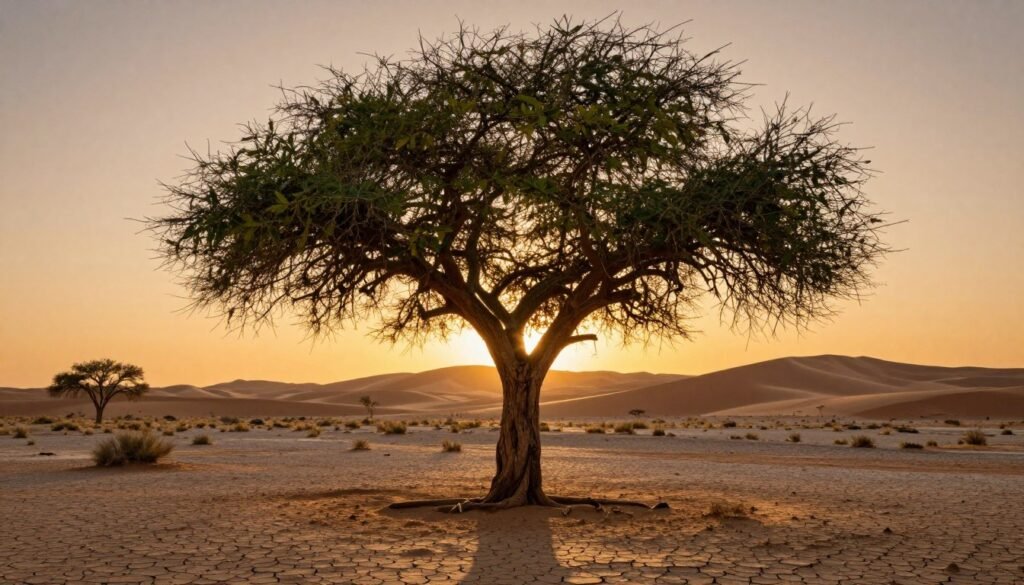
For the lowest established water demand, compare mesquite and ironwood first, then check the mature size and site conditions of the specific tree. Established trees need far less frequent watering than newly planted ones.
Phoenix-area rainfall is under 7 inches per year, and native trees generally suit lower-water conditions. Mesquite, ironwood, and African sumac are options for water-wise desert landscapes.
Mesquite varieties range from shrubs to trees over 50 feet tall and 100 feet wide. Established trees may need little or no water, depending on the variety.
Mesquite can also need pruning to raise low limbs, and seed pods may need cleanup. That extra yard care can be part of the tradeoff for a low-water tree.
Ironwood, a Sonoran Desert native, grows in full sun and tolerates varied soil types. Depending on irrigation, it can need no water or occasional summer watering.
Occasional deep watering in summer can help ironwood look its best. African sumac grows 20-30 feet tall and wide, and tolerates heat and poor, dry, salty soil.
Established low-water tree varieties need minimal water to grow and thrive in desert landscapes. The right choice still depends on the tree’s size and your site.
Chaste tree offers a useful contrast, not a no-water plan. It grows moderately fast to 20 feet tall and wide.
From April to October, chaste tree needs regular, deep but infrequent watering. Extra water can speed growth but reduce flowering; the rest of the year, it needs little to no water.
Do not put a chaste tree on a no-irrigation plan during its April-October growing season.
Which Trees Keep Their Foliage or Seasonal Interest?
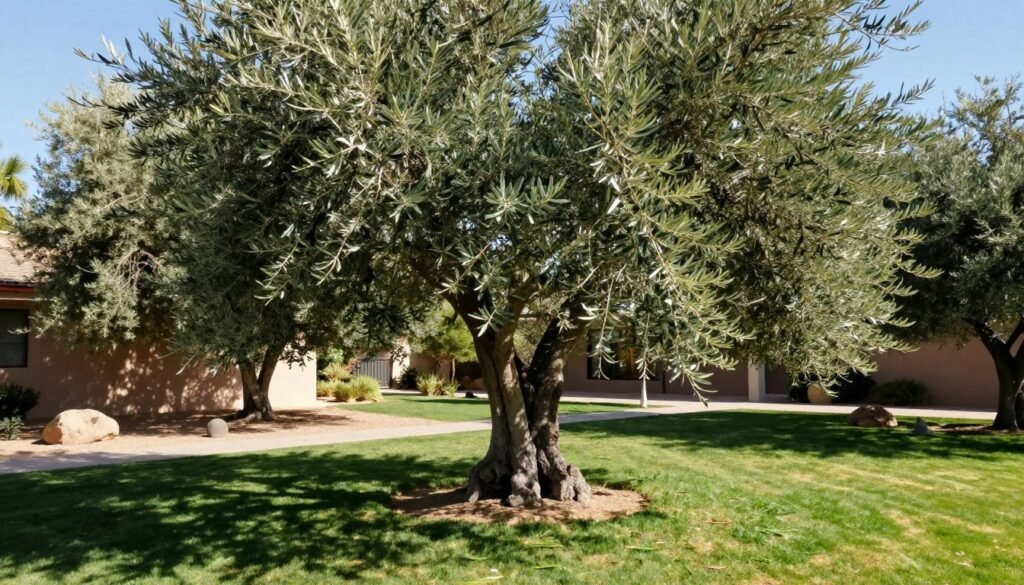
For evergreen foliage, fruitless olive is the clearest fit among these choices; for a seasonal leaf display, Chinese pistache is the better match. Canopy form also helps distinguish the other options.
Fruitless olive grows in full sun, tolerates alkaline soil, and is heat-loving. Its cloud-shaped canopy casts deep to filtered shade.
| Tree | Mature height and spread | Foliage or canopy trait |
|---|---|---|
| Chinese pistache | 30-35 feet tall, 20-30 feet wide | Drops fall leaves all at once |
| Fruitless olive | 25-30 feet tall, nearly as wide | Evergreen; deep to filtered shade |
| Weeping myall | 15-30 feet tall, 15-25 feet wide | Weeping branches; dense shade |
| Willow acacia | 30 feet tall, 20 feet wide | Narrow form for limited space |
Chinese pistache grows quickly and tolerates drought, wind, and heat. Its leaves fall all at once in fall, which can mean a short period of concentrated cleanup.
Weeping myall’s drooping branches form dense shade. Willow acacia offers a narrower shape that can suit a tighter planting area.
Evergreen trees hold foliage through winter, while deciduous trees drop leaves during the year. That difference can affect both shade and yard care.
Decide whether winter foliage or a concentrated fall leaf drop better fits your cleanup preferences.
When Should You Plant a Tree in Tempe, and How Do You Establish It?
Fall is the preferred planting window in the Phoenix area, with spring the next-best choice. Summer planting is discouraged because desert heat makes it harder for a young tree to establish.
A new tree needs frequent watering during its first weeks and months. As roots spread and the tree becomes established, watering can become less frequent and deeper.
Choose the Planting Window
Fall gives a new tree time to settle before the next stretch of intense heat. Spring is the next choice, while summer installation adds stress during hot weather.
Choose a planting time that lets you keep up with early watering. A tree still needs close care as it begins to root into the surrounding soil.
Set Up the Root Zone for the First Year
Prepare a broad planting hole and keep the root ball at the right depth. These four steps give the roots a sound start:
- Dig a hole at least twice as wide as the root ball, and no deeper than its height.
- Backfill the hole, then water the root zone thoroughly.
- Add 2-4 inches of mulch, keeping it away from the trunk.
- Check soil moisture and adjust watering to the tree, soil, and weather.
A new tree may need water every 5-7 days during its first year, but that interval is only a possible starting point. Soil and seasonal conditions can change how often you need to water.
As the tree establishes, shift toward deeper watering at longer intervals. Check the soil rather than assuming the same routine suits every tree and season.
Recheck soil moisture after hot or windy weather instead of following a calendar without regard to the site.
Where Should You Plant a Shade Tree to Protect Your Home and Hardscape?
Place a shade tree where its mature canopy blocks the sun that makes the home or patio hottest. In the Phoenix area, the west side gives the best afternoon shade, with the east side next.
Roots can reach far beyond the trunk and often beyond the canopy’s dripline, the edge where rain or irrigation falls from the branches. Plan for a growing root zone, not just the visible tree.
- Prioritize the west side for afternoon shade; consider the east side next.
- Compare mature spread with the house, paving, and overhead space.
- Call 811 before digging; use 5-10 feet from buildings as a general starting point.
- Keep Ficus away from paving and utility lines because roots can spread over 30 feet.
Broad canopies may need more than the general building setback. Ficus roots can crack sidewalks, patios, and driveways, or invade sewer lines and water pipes.
Roots often absorb water at and beyond the dripline. Irrigation should soak the expanding root zone 18-36 inches deep.
Check drainage and caliche, or hardpan, before planting in Tempe soil. If turf and tree needs differ, keep their irrigation schedules separate.
Landscape choices can also shape comfort near paving and outdoor areas. See Tempe landscape planning ideas for ways plants can work together.
Give the roots room to expand beyond the trunk and keep buried utilities clear before digging.
Conclusion
A shade tree succeeds when its mature canopy fits the home, the yard, and the way the property is used. The best choice balances tree size, the shade you want, and your household’s water and cleanup capacity.
Tree choices also shape the wider neighborhood. The 3-30-300 rule sets benchmarks for a view of three trees, over 30% neighborhood tree-canopy cover, and a park within a 300-meter walk.
The 10/20/30 urban forestry rule of thumb addresses community tree diversity, not one homeowner’s yard. It limits one species to 10%, one genus to 20%, and one family to 30% of a community’s trees.
For your property, the lasting question is whether the tree can thrive without crowding the house or creating more care than you can manage. A sound landscape plan accounts for those needs before planting.
Visit rtloaz.com to discuss a tree and landscape plan suited to your Tempe property.