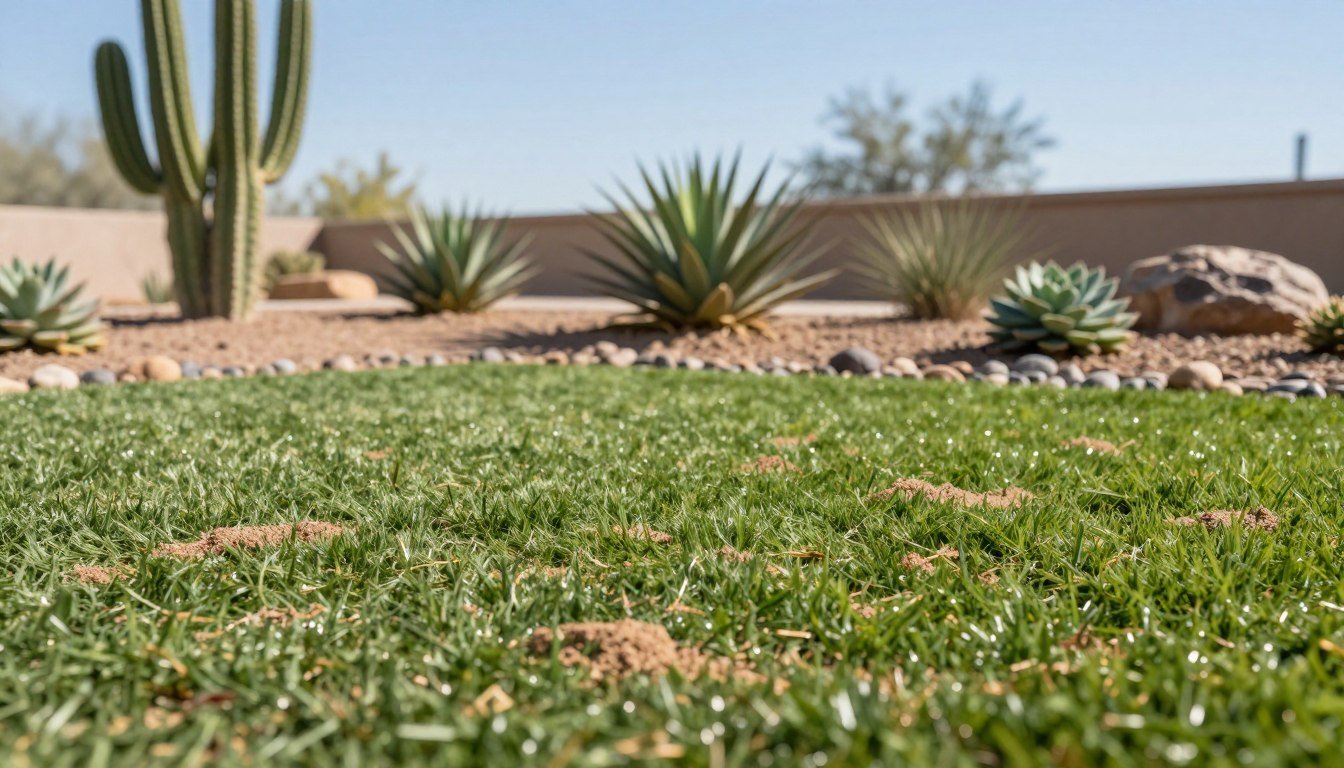
Cleaning artificial turf in Arizona means clearing loose debris, rinsing according to use and dust, brushing fibers upright, and treating pet spots or spills promptly. Desert dust, low-water landscaping, and seasonal weather shape how often your yard needs care.
Artificial grass saves you from mowing and fertilizing, but it still collects leaves, grit, and dust. A light routine helps control odor, keeps the surface tidy, and supports drainage without wasting water.
This guide gives you a practical monthly schedule for regular home care. You can adjust the work to match yard use, pets, and weather, rather than rinsing more than needed.
A low-water yard still needs a deliberate care routine to stay clean and drain properly.
Key Takeaways
- Clear leaves and dust before rinsing.
- Brush flattened fibers against their direction.
- Rinse pet-use areas at least weekly.
- Use turf-safe cleaners and test them first.
- Check drainage after storms or when water pools.
How to Clean Artificial Turf in Arizona
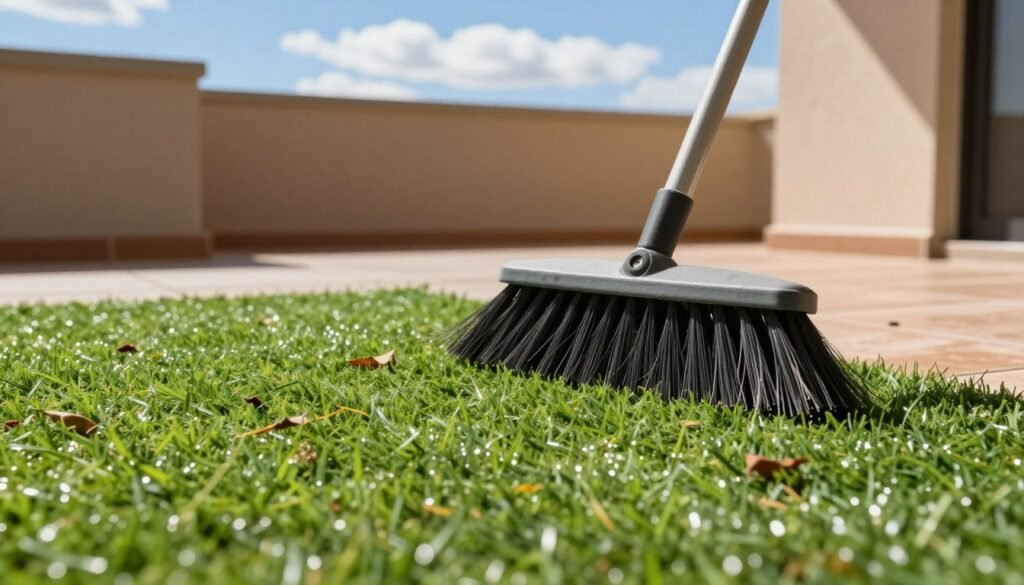
Start by removing loose debris, then rinse fine dust with a gentle spray. This simple cleaning sequence works for most home turf and keeps grass fibers from being buried under dirt.
Clear Loose Debris and Rinse the Surface
A leaf blower or stiff-bristle broom clears loose desert debris before a gentle hose rinse carries away fine dust. Work from one side of the lawn toward the other, moving leaves into a collection spot instead of scattering them.
Use a garden hose with a soft spray, not a forceful jet. Phoenix homes without pets can rinse turf every 2-4 weeks, with dust and use shaping the amount of cleaning needed.
A basic turf-cleaning sequence also works for small yards, where a blower may send leaves into a neighbor’s space. Infill is the loose granular material between turf fibers that supports the fibers and helps them stand upright.
Brush Fibers and Clean Balcony Turf
Brush flattened fibers against their direction with synthetic bristles. Short, steady strokes lift the grass without pulling at the backing, and a broom suits narrow paths or worn spots.
To clean fake grass on a balcony, sweep it with a hand broom and collect leaves by hand. Rinse only where you can safely collect the runoff or direct it to a suitable drain.
Do not flood a walkway or send water onto a neighbor’s balcony. On a balcony, manage rinse water so it reaches a suitable drain rather than spilling over an edge.
What Monthly Schedule Works for Arizona Turf?
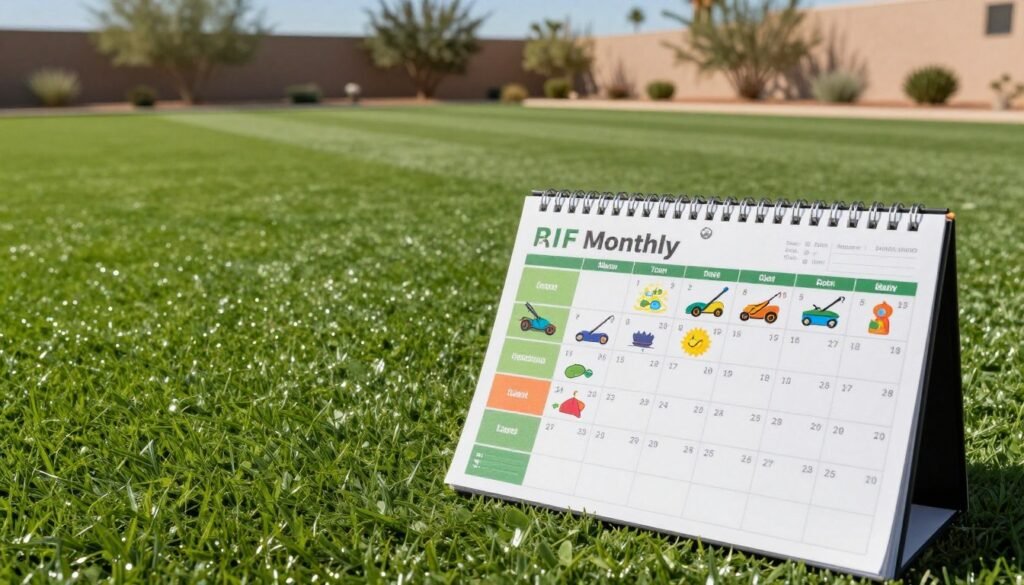
A simple four-week rotation gives each month a rinse, a brush, a pet-area check, and a drainage check. It spreads routine maintenance across the month, so no single week needs a long cleaning session.
Divide Monthly Care Into Four Simple Weeks
Use this rotation as a starting point, then add work when dust, use, or seasonal debris calls for it.
- Week 1: Rinse the turf to clear loose dust.
- Week 2: Brush high-traffic areas to lift flattened fibers.
- Week 3: Spot-treat pet areas as needed.
- Week 4: Check drainage and look for pooled water.
These small tasks help keep artificial grass tidy without turning lawn care into a full-day job. A busy play area may need more attention than a quiet garden corner.
Adjust Professional Cleaning for the Season
Arizona’s seasonal weather changes the work a yard may need. Dust, daily use, and storm debris can add cleaning needs without changing the monthly home-care rotation.
Use these seasonal checkpoints to plan professional cleaning around household use and local weather.
| Timing | Professional-cleaning action | Reason or household condition |
|---|---|---|
| June-September | Schedule monthly cleaning | Pet owners |
| June-September | Book at least one mid-summer visit | Homes without pets |
| December-February | Clean every 8-12 weeks | Winter maintenance |
| March or April | Schedule a deep clean | Remove winter debris before summer |
| October | Clean after monsoon season | Clear storm-deposited debris |
The monthly summer cleaning interval applies to pet owners; pet-free homes need at least one mid-summer visit. Set the October cleanup after monsoon season to clear storm-deposited material.
How Should You Clean Artificial Turf for Pets?
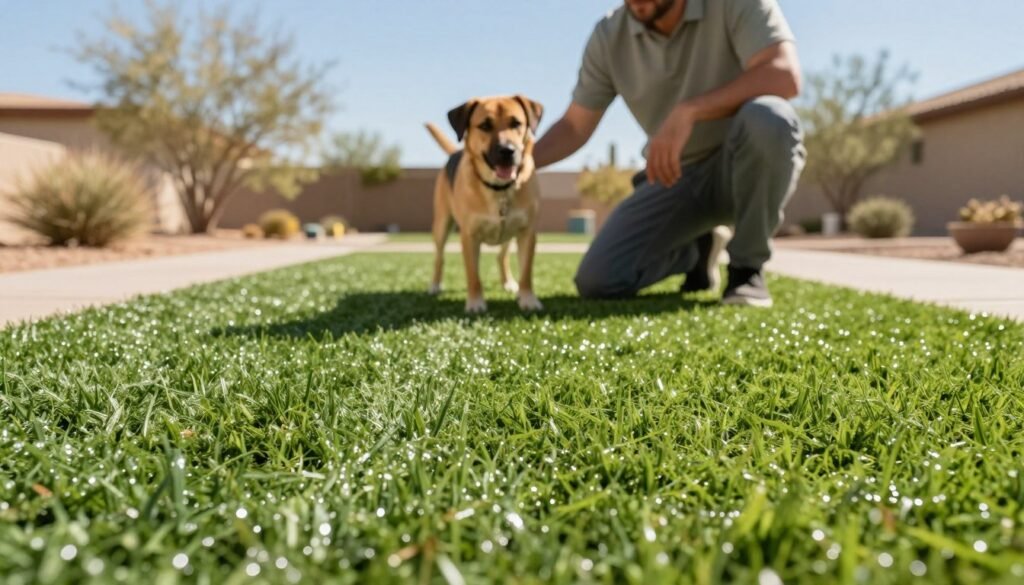
Remove solid waste first, then rinse the affected area to flush away residue. That is how to clean artificial turf for dogs, including fake grass with dog urine and poop.
Remove Solid Waste and Rinse the Spot
Clean pet-use areas promptly so waste does not sit in the fibers. Use this three-step method for solid waste and nearby residue:
- Pick up solid waste promptly with a scooper or bag.
- Rinse the affected spot with water.
- Check the fibers and backing for visible residue.
For fake grass with dog urine and poop, remove solids first, then rinse the affected area. A careful rinse moves residue through the backing instead of spreading it across the lawn.
Rinse pet-use areas at least weekly to help flush residue. This extra care matters in warm weather, when odor can linger in a frequently used area.
Treat Urine Odor With Enzymes
To clean fake grass from dog urine, rinse first, then use an enzyme cleaner if odor persists. Enzymes help break down odor-causing material rather than masking the smell.
Enzyme treatments every 4-6 weeks can help prevent odor buildup on Arizona pet turf. Choose a turf-safe enzyme product and follow its label for use and rinse instructions.
A turf-safe enzyme cleaner suits pet odor better than a general household soap. Apply it only to the areas named on the label, and let it work for the stated time.
If odor remains after routine rinsing, use an enzyme cleaner labeled for turf and follow its directions.
Which Cleaners Remove Stains Without Damaging Turf?
A few drops of mild dish soap in warm water are enough for many fresh surface stains. Mild soap suits ordinary spills, while an enzymatic turf cleaner targets pet odor.
Mix a Mild Cleaner for Surface Grime
For general surface grime, mix 2 tablespoons of mild dish soap into 1 gallon of water. Add 1 cup of white vinegar only as an optional odor treatment.
Use a smaller mix for a stain: add a few drops of mild dish soap to warm water. This approach can lift coffee, soda, juice, grease, oil, or mud without soaking the whole lawn.
Test any cleaner on a hidden spot first. Apply it, wait 10 minutes, rinse, and check for color change, softened fibers, or backing separation.
Spot-Treat Stains and Gum Carefully
For the best artificial turf cleaner for dogs, choose a turf-safe enzyme product and follow its label. Do not treat every turf product as compatible with household cleaners.
Before cleaning a visible stain, use the hidden-spot test described above. The 10-minute cleaner test helps reveal changes that might not show while the product is wet.
Freeze gum with ice, then lift it with a plastic edge or your fingers. Avoid a metal tool, which can cut or snag fibers.
Bleach, ammonia, harsh soaps, acetone, paint thinner, petroleum solvents, and most solvents can harm turf parts. Rinse every treated spot thoroughly so soap or cleaner does not remain on the fibers.
Which Tools Help Keep Turf Clean and Upright?
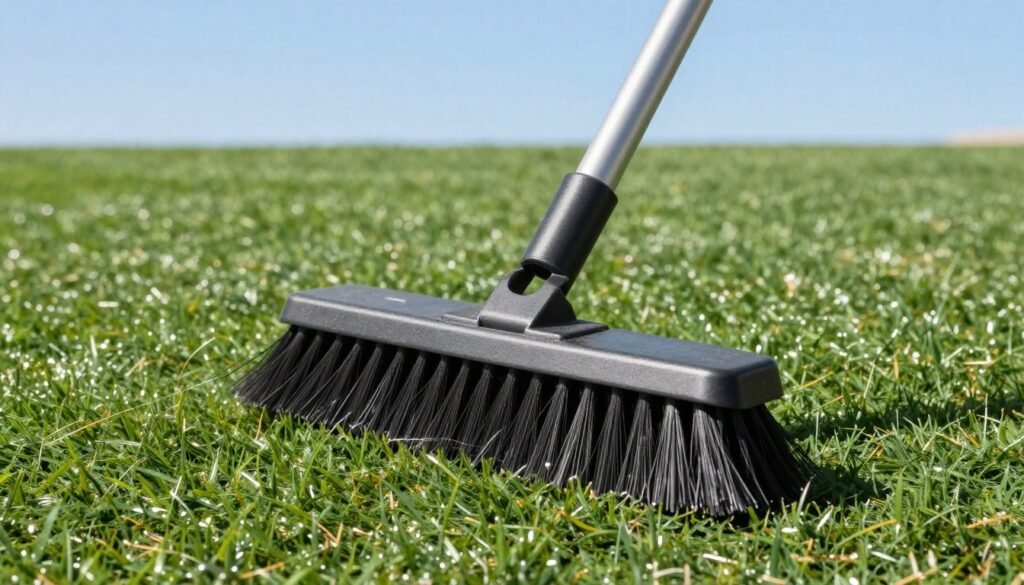
A synthetic-bristle broom handles routine fiber lifting, while a powered sweeper is useful for larger or heavily matted areas. Choose tools that suit the surface and its infill, rather than relying on suction.
Brush turf monthly against the fiber direction to lift the blades. Infill may need replenishing every 3-5 years, depending on the installation and wear.
An artificial turf cleaner machine can help when manual brushing is not enough. The Synthetic Turf Council’s maintenance guidelines offer technical advice alongside the turf provider’s warranty instructions.
| Model | 2026 listed price | Motor or power source | Key feature |
|---|---|---|---|
| GreenSweep Reviver | $199 | 1,300-RPM motor | 12-inch brush, variable speed |
| GreenSweep TurfoMax | $249 | 13-amp motor | 15-inch DuoHelix brush, self-propelled |
| GreenSweep TurfoVolt | $399 | Two 4Ah batteries | 40-minute runtime, 2,500-RPM brush |
| GreenSweep Pro Series | $899 | Briggs & Stratton CR950, 208cc | Gas-powered engine |
The Roll & Comb electric power broom has an 1,800-watt motor, a 16-inch working width, and a 40-liter collection bag. The GreenSweep V2 has a 45-liter collection bag and five adjustable height settings.
Vacuum suction can loosen infill and grass blades, leaving the surface flattened or saggy. A pressure washer is not routine equipment; for spot cleaning, use a light, distant, wide-angle spray and avoid seams and edges.
Avoid vacuuming infilled turf unless the equipment and method are approved for that surface.
When Does an Artificial Turf Cleaning Service Make Sense?
Persistent odor, pooling water, or fibers that stay flat after brushing are signs that DIY care may not be enough. A professional service can address problems that ordinary cleaning leaves behind.
Recommended service intervals depend on how many pets regularly use the lawn. Schedule professional cleaning every 4-6 weeks when two or more dogs use Arizona turf regularly.
For one pet, professional cleaning every 6-8 weeks is recommended. A home without pets should plan for professional cleaning every 3-6 months.
Look for these signs when deciding whether to book help:
- Fibers stay flat after brushing.
- Water pools instead of draining.
- Pet odor remains after enzyme treatment.
- Infill looks compacted or displaced.
An artificial turf cleaning service may use a power broom and address infill and drainage. Ask what the visit includes before booking, since service work can vary.
Match the service interval to the number of pets that regularly use the surface.
How Do Arizona Conditions Affect Turf Drainage and Wear?
A desert storm can leave fine dust across a low-water yard even when the turf has no visible mud. Arizona’s dry climate, dust, and seasonal weather shape how often you need to clear the surface.
Low-water landscaping reduces irrigation, but it does not remove residue that settles on synthetic turf. After a significant dust storm, rinse the surface and brush away dust and debris.
Drainage also depends on the soil and the prepared base below the turf. Caliche can impede drainage when it forms a shallow or continuous barrier, while deeper or broken layers may affect the site differently.
Correctly installed turf should drain rain through its backing and prepared base. The base and drainage path must carry water away rather than trapping it below the lawn.
Natural grass can show soggy soil after rain, but turf has its own warning sign: standing water that does not clear. Persistent puddling after rain is a reason to have the drainage path inspected.
Conclusion
A consistent, light-touch routine is the simplest way to keep an Arizona turf lawn clean and usable. Clearing debris, rinsing when needed, and treating spills promptly support practical artificial grass maintenance.
Care also means watching for changes, such as stubborn pooling or fibers that no longer lift. Those signs can point to a drainage or wear issue that needs more than surface cleaning.
For help with an Arizona turf project or cleaning needs, visit rtloaz.com to discuss your turf cleaning or outdoor-service needs.