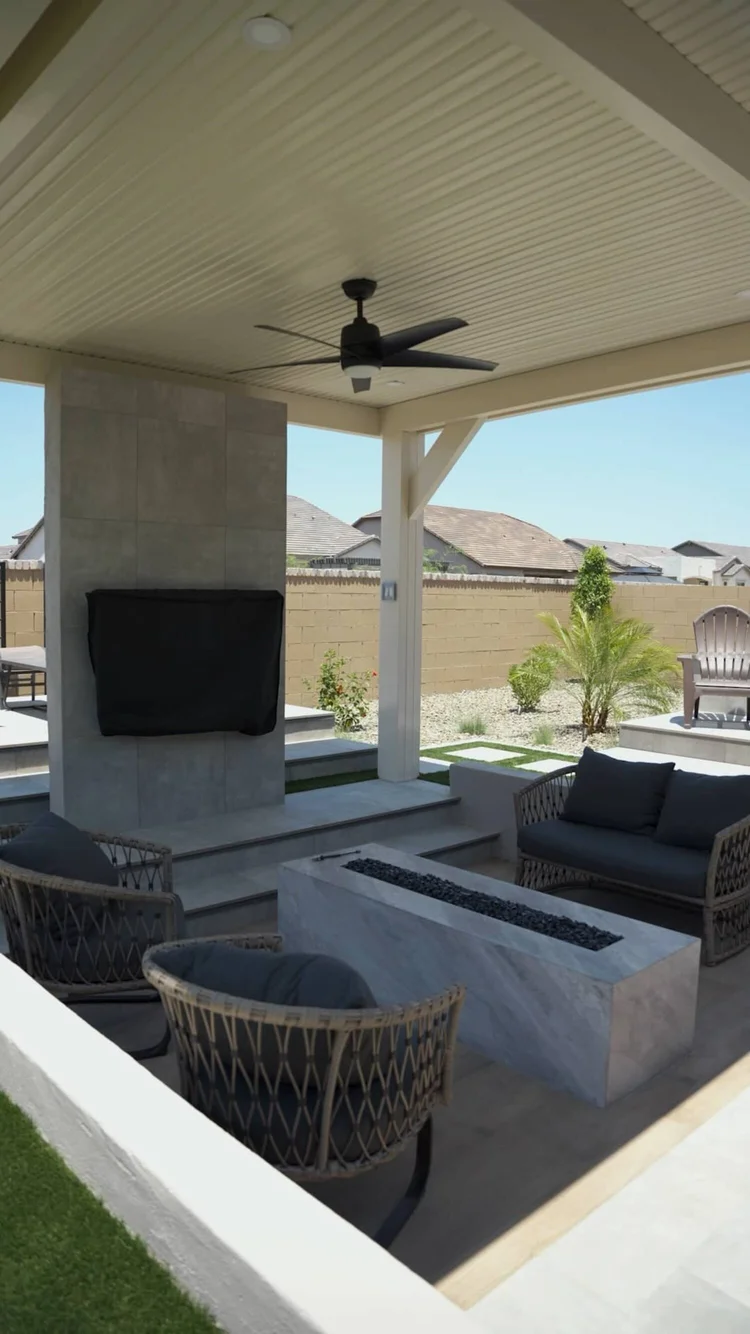
Aluminum pergolas survive Arizona sun and insects better than wood, but a pergola survives monsoon winds only when its roof, footings and drainage are right, whatever the frame is made of. A pergola is an open structure with a top of slats, louvers, panels or fabric. A louvered roof is a roof made of angled blades that tilt open for sun and closed for shade and rain.
The main trade-off is simple. Aluminum does not rot or feed termites, and it holds up through the sun. Its frame can run hot in the afternoon, while wood looks warmer but needs regular sealing under Arizona sun.
The roof, the anchoring and the drainage matter as much as the frame for both materials. This article compares the two materials, roof choices, monsoon wind and permit rules in Phoenix, Scottsdale and Chandler. It ends with a checklist for your outdoor living renovation. Decide on the roof before the frame, because the roof sets the rain protection, the shade and the wind load.
Key Takeaways
- Aluminum resists sun, rot and insects better than wood.
- An aluminum frame can get hot to touch in afternoon sun.
- Wood needs sealing every 1 to 3 years in Phoenix.
- Only a closed louvered or solid roof with gutters keeps rain off the patio.
- Footings and drainage decide whether a pergola survives monsoon winds.
Why Aluminum Pergolas Outlast Wood in Arizona Sun
Aluminum pergolas last longer than wood in Arizona sun because the metal does not rot, split or feed termites. Wood takes the same sun for years and starts to crack and gray. Aluminum loses on heat, not on durability.
Aluminum outdoor frames are only as good as their alloy and coating. Alloying elements and treatment change aluminum’s strength and corrosion resistance, according to The Aluminum Association’s standards pages on alloy designations.
| Factor | Aluminum | Wood |
|---|---|---|
| Rot and termites | Does not rot or attract termites | Can rot and attract termites |
| Sun damage | Does not crack or gray | Can crack, gray and raise grain |
| Heat transfer | Conducts heat quickly | Moves heat more slowly |
| Splinters | None | Can splinter |
What Sun, Rot and Termites Do to Wood
Wood is attacked by sun, rot and insects in ways aluminum is not. Prolonged sun can make wood crack, gray and develop raised grain. Water that soaks into the wood can start rot, and termites feed on it.
Where an Aluminum Frame Gets Hot
The honest drawback of aluminum is heat. The frame conducts heat and can be hot to touch in afternoon sun. Light colors and shade over the frame help keep it cooler.
A wood grain finish on aluminum copies the look of timber without the rot or cracking. A metal frame alone gives no rain protection, because rain protection comes from the roof.
Ask the seller for the frame material and finish in writing, since “aluminum” alone does not describe the alloy or the coating.
Keeping a Wood Pergola Up in Phoenix Sun
Plan to stain or seal a wood pergola in Phoenix every 1 to 3 years, and expect the sunniest side to need it first. The south and west faces take the most sun. Sun dries out the wood grain fast, so those faces need the next coat sooner.
Cedar and redwood resist decay better than pine, so they are the stronger choice for a pergola top. Wood pergola tops still need sealing every few years, even with these species.
If you will not re-seal on schedule, wood is the wrong choice for a full-sun Arizona patio. Log the date of each coat so the next one lands before the wood grain starts to gray and lift.
Picking a Roof for Rain, Shade and Privacy
A closed louvered roof or a solid roof with gutters is the only option here that keeps rain out, while open slats give shade and airflow only. A pergola roof is the part that decides how much rain and shade reach your patio. The frame only holds the roof up.
| Roof type | Rain protection | Shade and heat | Noise |
|---|---|---|---|
| Open slats | None | Shade with airflow, sun gets through | Quiet |
| Closed louvered roof with gutters | Yes, when blades close and gutters drain | Full shade when closed, adjustable | Quiet |
| Insulated aluminum panels | Yes | Full shade, cooler underneath | Quieter than polycarbonate |
| Polycarbonate panels | Yes | Lets heat and light through | Noisy in rain |
Open Slats: Shade Without Rain Protection
Open slats give shade and airflow but no rain protection. Do not buy an open-slat roof when rain on the patio is the main concern.
Solid and Louvered Roofs That Keep Rain Out
A solid roof or a closed louvered roof keeps rain out when it has gutters and downspouts. Leaks usually come from clogged or undersized gutters, louvers that do not close fully, or rain blown sideways. The roof needs a slight pitch, and downspouts should direct water away from the house, pool and seating area.
An adjustable louvered roof suits sun and rain control, since you tilt the blades as the weather changes. A fabric canopy suits softer shade and a lighter feel.
Insulated Aluminum Panels Versus Polycarbonate
Insulated aluminum panels give full shade and a cooler, quieter space underneath than polycarbonate. Polycarbonate keeps rain out but lets heat and light through. It gets noisy in rain, scratches or yellows, and shows dust and bird droppings.
In Phoenix, direct afternoon sun on a west-facing patio can make the space under polycarbonate panels very hot. Check that the louvers close fully and the gutters are clear before the first monsoon, since those two faults cause most leaks.
Monsoon Winds, Added Weight and Tarps
A tarp over a pergola can fail in one monsoon gust because it catches the wind like a sail. Water can also pool in its low spots. Arizona sun can break down most tarps within a season.
The National Weather Service reported widespread damaging gusts of 55-65 mph across the Phoenix area on August 19, 2026. Adding a solid or louvered roof adds weight and wind load, so check these five items first:
- The existing frame and posts
- The footing size
- Uplift-rated connections from the roof to the foundation
- Gutter and downspout routing
- Louver closing and locking
Do not add a solid roof to a frame built for open slats without an engineer’s check. Re-check the connections after the first big storm of each season, since loose fasteners show up there first.
Permits for Pergolas Across Phoenix, Scottsdale and Chandler
Whether you need a permit depends on whether the pergola touches the house, how big it is and whether it carries power. A solid, louvered or fabric-covered pergola roof is generally treated as a patio cover. An open-slat structure is more often treated as a shade structure or trellis.
The International Residential Code Section R105.2 baseline exempts one-story detached accessory structures of 200 square feet or less, subject to local adoption and amendments. Adding electrical work such as lights, fans or heaters can require a separate permit, even when the structure is exempt.
Phoenix: Exempt Shade Structures and Utilities
Phoenix exempts one-story detached, non-cantilevered shade structures of up to 200 square feet from a building permit. Adding utilities to an otherwise exempt structure still requires a permit for the utilities. String lights or outlets count as utilities, so plan for that permit early.
Scottsdale: Attached Patio Covers and Electrical Work
Scottsdale requires a building permit for an attached patio cover, including repair or replacement. It also requires a permit for electrical work added to a patio cover. An attached pergola is generally treated as an alteration to the house, because the house carries part of its load.
Chandler: Exemption Size, Footings and Pool Bonding
Chandler’s permit exemption covers one-story detached accessory structures of 120 square feet or less and 7 feet tall or less. The city lists open-air ramadas as needing a building permit. Its homeowner manual requires attached patio-cover footings to be at least 18 inches square and 12 inches deep, with beams at least 6 ft 8 in above the floor.
Metal covers within 5 ft of a pool must be bonded to the pool’s bonding system. An attached pergola is an alteration in nearly every city, so do not assume the small-size exemption applies to it. Confirm the rule with the city’s building department before you order, since attachment and utilities change the answer.
What Drives Pergola Cost and How Long It Lasts
A pergola’s price and lifespan are set mostly by its size, its roof and how it is anchored, not by the frame material alone. Durability depends on engineering, anchoring, material quality and construction details. The five cost factors below move the total most:
- Overall size and span
- Roof type, since adjustable louvers and solid roofs cost more than open slats
- Footings and anchoring to concrete or pavement
- Electrical work for lights or fans
- Installation crew and delivery, since larger louvered pergolas may need four to six people to install
A frame bought without footing details is where lifespan is lost first. A good footing costs more up front, but it protects the whole structure in a monsoon.
Ask every quote to list footings, anchors and electrical work separately, so the totals can be compared.
Deciding Between Aluminum and Wood for a Renovation
For most Arizona renovations, aluminum is the safer pick, and wood wins only when you will keep sealing it on schedule. Use this checklist to match the structure to your backyard. Answer each question for your own yard before you settle on a pergola outdoor design.
- What is your budget and timeline?
- Must the roof keep rain off the patio?
- Will you re-seal wood on schedule?
- Is a pool or a west-facing patio under the structure?
- Do you want a louvered roof for adjustable sun or a fixed roof for a fuller cover?
A wood pergola is the wrong choice where sealing is not planned. An open-slat aluminum pergola is the wrong choice where rain must be kept off the seating.
A gazebo-style enclosed structure may suit an outdoor space where an open top is not enough. It gives more cover for dining and seating. Price the roof for shade and rain before you price the frame, since the roof decides how much of the yard you can use.
Conclusion
Choose aluminum pergolas if you want low upkeep in Arizona sun, and choose a closed louvered or solid roof with gutters if rain matters. Aluminum resists sun, rot and insects, while wood needs regular sealing to last. Only a closed roof with gutters keeps rain off the patio.
Measure the footprint, then check the permit rule with your city before you order.